
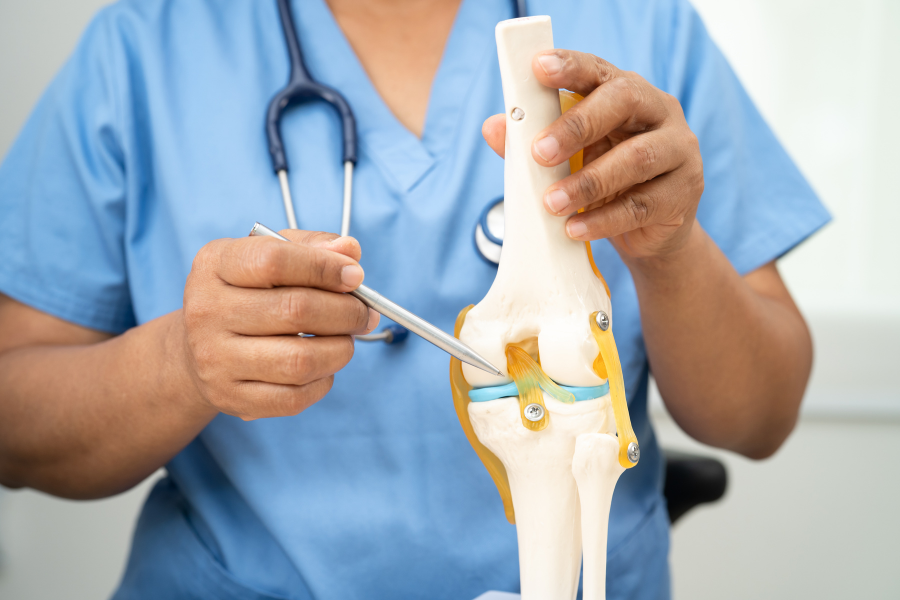
For many seniors in Central Florida, staying mobile is the key to independence. However, when the smooth cartilage in your joints begins to wear thin, the resulting knee osteoarthritis can make simple activities like walking and exercising feel impossible.
If you’ve been told that a total knee replacement is your only remaining option, or if you are tired of steroid injections that provide less and less relief, it’s time to explore new solutions for arthritis pain management right here in Orlando. Low-dose radiotherapy (or LDRT) offers a non-surgical option for JointGlow patients seeking lasting relief.
How Arthritis Progresses in the Knee Joint
Osteoarthritis is a degenerative, wear-and-tear condition. As cartilage breaks down, bones begin to rub together, creating friction and chronic inflammation. This inflammation is what causes the hallmark stiffness, swelling, and grating sensation in the joint.
Immune cells inside the joint release chemical mediators that irritate tissues and intensify pain over time, creating a cycle that becomes difficult to stop.
Why Traditional Knee Arthritis Treatments Fall Short
While physical therapy and anti-inflammatory medications are great first steps, they often stop working as the condition advances. Many seniors choose to suffer in silence rather than face the risks and lengthy recovery time associated with invasive surgery.
Anti-inflammatory medications, injections, and therapy often provide temporary relief but may not change the underlying inflammatory process. Surgery may begin to feel inevitable even when you are not ready to pursue it, and that’s when it may be time to consider low-dose radiotherapy, also called LDRT, instead.
LDRT: The Next Generation of Non-Surgical Pain Relief
At JointGlow, we offer LDRT for knee pain, a sophisticated application of low-dose radiotherapy. While radiation is commonly associated with high-dose cancer treatments, LDRT uses a fraction of that energy—roughly equivalent to a series of standard X-rays—to achieve a completely different biological goal.
Instead of destroying tissue, LDRT acts as a reset button for your joint:
- Sterilizing inflammation: It targets the overactive inflammatory cells (macrophages) that keep your knee in a state of constant irritation.
- Halting arthritis progression: By calming the biological environment of the joint, LDRT can help slow down the further degradation of remaining cartilage.
- Restoring mobility: About 70-80% of patients report significant pain reduction, often allowing them to return to the active hobbies they love within weeks.
LDRT works directly at the cellular level, reducing inflammatory cytokines, improving microcirculation, shifting immune cell behavior, and decreasing chronic swelling. These changes help explain why improvement often continues long after sessions end.
What LDRT Treatment Looks Like
At JointGlow, care plans are individualized using imaging and clinical evaluations. Sessions are short, painless, and delivered over several weeks. And the best part – you won’t have to deal with the lengthy recovery that often comes with joint replacement surgery.
Key Benefit: Active Aging Without the Downtime
The greatest benefit of LDRT at JointGlow is that it requires zero downtime. Our Orlando-based patients often head straight from their 10-minute session to whatever activity is next on their regular schedule. There are no needles, no anesthesia, and no hospital stays.
It is a painless, external treatment designed specifically for those who want to bridge the gap between conservative care and major surgery.
Frequently Asked Questions
Can LDRT help me avoid or delay knee replacement surgery?
Absolutely. LDRT is a clinically proven next step for patients who haven’t found relief through injections or physical therapy. It is specifically designed to reduce pain and improve function so you can postpone or even eliminate the need for invasive joint replacement.
What does the treatment process look like at JointGlow?
The process is straightforward: after an initial consultation and precise mapping of your joint, you will typically undergo six short sessions (about 10-15 minutes each) over a two-week period. The actual radiation procedure is usually under one minute and is completely painless.
How long does the pain relief last?
Most patients experience a significant reduction in symptoms that can last from six months to two years. Because the treatment is so low-dose and non-invasive, it can often be repeated in the future if symptoms eventually return, helping you maintain an active lifestyle indefinitely.
Take Your Next Step With JointGlow
JointGlow offers advanced non-surgical treatment options for knee arthritis and chronic joint pain. Book a consultation today to explore whether LDRT is right for you.