The First 24–48 Hours: Immediate Relief and Flare Control
To reduce joint inflammation quickly, immediately offload the affected joint, apply a cold pack for 15 to 20 minutes, use light compression support, and elevate the limb above heart level to limit fluid accumulation. Knowing how to reduce joint inflammation quickly interrupts the acute inflammatory loop, prevents secondary tissue irritation, and accelerates recovery.
When a flare strikes, your body initiates a rapid biological cascade. The synovial membrane lining your joint capsule becomes hyperemic, flooding the articular space with inflammatory cytokines, white blood cells, and excess fluid. This sudden influx leads to visible synovial swelling, heat, throbbing pain, and a sharply diminished range of motion.
Immediate First Aid: How to Reduce Joint Inflammation Quickly in the First 24 Hours
During acute flares, the classic R.I.C.E. protocol (Rest, Ice, Compression, Elevation) remains the gold-standard first-line defense:
- Rest and Protect: Immediately offload the affected joint. Cease any strenuous activity or repetitive loading that triggers mechanical stress.
- Cold Therapy: Apply a cold pack wrapped in a thin cloth directly over the inflamed joint for 15 to 20 minutes at a time. Repeat this every 2 to 3 hours. Cold constricts local blood vessels, which rapidly blunts cytokine delivery and numbs sharp pain signals. Keep sessions under 20 minutes to prevent reactive vasodilation or skin damage.
- Avoid Direct Heat: Never apply heating pads, hot compresses, or hot baths during the first 24 to 48 hours of an acute, swollen flare. Heat increases localized blood circulation and capillary permeability, which can worsen joint effusion.
- Compression: Lightly wrap the joint with an elastic bandage or slip on a supportive sleeve. Compression helps limit the pooling of synovial fluid while providing sensory feedback to stabilize the area. Ensure it is snug but not tight enough to compromise circulation.
- Elevation: Whenever you are seated or lying down, elevate the affected limb above the level of your heart to encourage venous drainage and reduce interstitial pressure.
Over-the-counter non-steroidal anti-inflammatory drugs (NSAIDs) like 400 mg of ibuprofen can ease joint inflammation in as little as 45 minutes by inhibiting cyclooxygenase (COX) enzymes. Always consult a healthcare professional before starting medication, especially if you have gastrointestinal, cardiovascular, or renal considerations.
Common Flare-Up Mistakes to Avoid:
- “Pushing Through the Pain”: Forcing an inflamed joint through intense exercise causes micro-trauma, prolonging the inflammatory cycle.
- Complete Immobilization: While heavy loading must stop, absolute bed rest causes joint capsules to stiffen and slows fluid clearance.
- Applying Early Heat: Using hot tubs or heating pads on a visibly swollen, warm joint exacerbates tissue edema.
- Skipping Hydration: Dehydration thickens synovial fluid, concentrating inflammatory mediators within the joint cavity.
Differentiating Inflammatory Flares from Mechanical Joint Strain
Not all joint pain originates from the same physiological driver. Understanding whether your discomfort is immune-driven/inflammatory or structural/mechanical determines the right path forward.
For instance, localized conditions like bursitis involve the swelling of fluid-filled friction pads; you can explore common bursitis symptoms to understand how localized soft-tissue inflammation differs from systemic joint decay.
| Characteristic | Inflammatory Joint Pain | Mechanical Joint Pain / Strain |
|---|---|---|
| Primary Cause | Autoimmune activity, crystal buildup, synovitis | Wear-and-tear, ligament sprain, structural overload |
| Morning Stiffness | Prolonged, lasting >45 to 60 minutes | Brief, usually resolving within 15 to 30 minutes |
| Response to Movement | Symptoms often improve with gentle, light activity | Symptoms worsen with activity and improve with rest |
| Local Warmth & Erythema | Joint feels noticeably warm or hot; visible redness | Typically absent unless accompanied by severe trauma |
| Joint Effusion (Swelling) | Soft, boggy, generalized swelling across capsule | Localized, firm, or structural swelling around tendons |
| Systemic Symptoms | May include fatigue, low-grade malaise, brain fog | Isolated strictly to the mechanically injured joint |
Dietary Resets: How to Reduce Joint Inflammation Quickly with Foods and Hydration
What you put on your plate directly influences systemic inflammatory markers. The gut-joint axis plays a central role in joint health: pro-inflammatory foods alter the intestinal microbiome and raise circulating levels of C-reactive protein (CRP) and interleukin-6 (IL-6). Making deliberate dietary adjustments can dampen baseline inflammation within days.
Anti-Inflammatory Nutrition: How to Reduce Joint Inflammation Quickly from Your Kitchen
To support your body during a flare, adopt a whole-food, Mediterranean-style dietary pattern that eliminates common metabolic triggers while flooding your system with protective phytonutrients:
- Eliminate Refined Sugars and Simple Carbs: High-glycemic foods spike blood glucose and insulin, accelerating the formation of advanced glycation end-products (AGEs) that trigger systemic inflammation.
- Remove Industrial Seed Oils and Trans Fats: Heavily processed vegetable oils (such as corn, soybean, and cottonseed oil) contain high ratios of omega-6 fatty acids, which can feed the arachidonic acid cascade that produces inflammatory prostaglandins.
- Prioritize Wild Cold-Water Fish: Salmon, mackerel, sardines, and anchovies deliver concentrated doses of eicosapentaenoic acid (EPA) and docosahexaenoic acid (DHA). These omega-3s convert into specialized pro-resolving mediators (SPMs) that actively clear joint inflammation.
- Load Up on Polyphenol-Rich Berries and Greens: Blueberries, blackberries, cherries, spinach, and kale provide high concentrations of anthocyanins and quercetin, which neutralize oxidative stress in synovial tissue.
- Incorporate Extra Virgin Olive Oil: High-quality olive oil contains oleocanthal, a natural phenolic compound that inhibits COX-1 and COX-2 enzymes in a manner remarkably similar to pharmacological NSAIDs.
- Add Nuts and Seeds: A 15-year study observed that individuals who regularly consumed nuts had a 51% lower risk of dying from an inflammatory disease compared to those who consumed the fewest. Walnuts and flaxseeds provide essential alpha-linolenic acid (ALA) to support cellular health.
For deeper insights on targeted meal planning, review this expert guide on rapid relief to align your nutrition with joint recovery.
Rapid Hydration Strategies and Anti-Inflammatory Beverages
Synovial fluid acts as your joint’s shock absorber and internal lubricant. It consists primarily of water and hyaluronic acid. When you are dehydrated, synovial fluid volume drops, increasing friction between articular cartilage surfaces and concentrating localized inflammatory mediators.
- Structured Daily Water Intake: Aim for 2.5 to 3.5 liters of clean water daily. Proper hydration supports metabolic clearance through the kidneys and preserves joint fluid volume.
- Unsweetened Tart Cherry Juice: Montmorency tart cherry juice contains potent anthocyanins. Clinical trials show that consuming 8 ounces of pure tart cherry juice can significantly lower serum uric acid and systemic inflammatory markers within hours.
- Green Tea (Matcha or Sencha): Packed with epigallocatechin gallate (EGCG), green tea inhibits the gene expression of pro-inflammatory cytokines like tumor necrosis factor-alpha (TNF-α). Replacing sugary drinks with green tea can quickly lower circulating inflammatory loads.
- Golden Milk (Turmeric Latte): Combine warm almond or oat milk with 1 teaspoon of ground turmeric, freshly grated ginger, a pinch of black pepper (piperine), and a dash of cinnamon for a soothing evening beverage.
- Lemon-Ginger Morning Water: Start your morning with warm water infused with fresh lemon juice and sliced ginger root to stimulate digestion and deliver gingerols directly into the bloodstream.
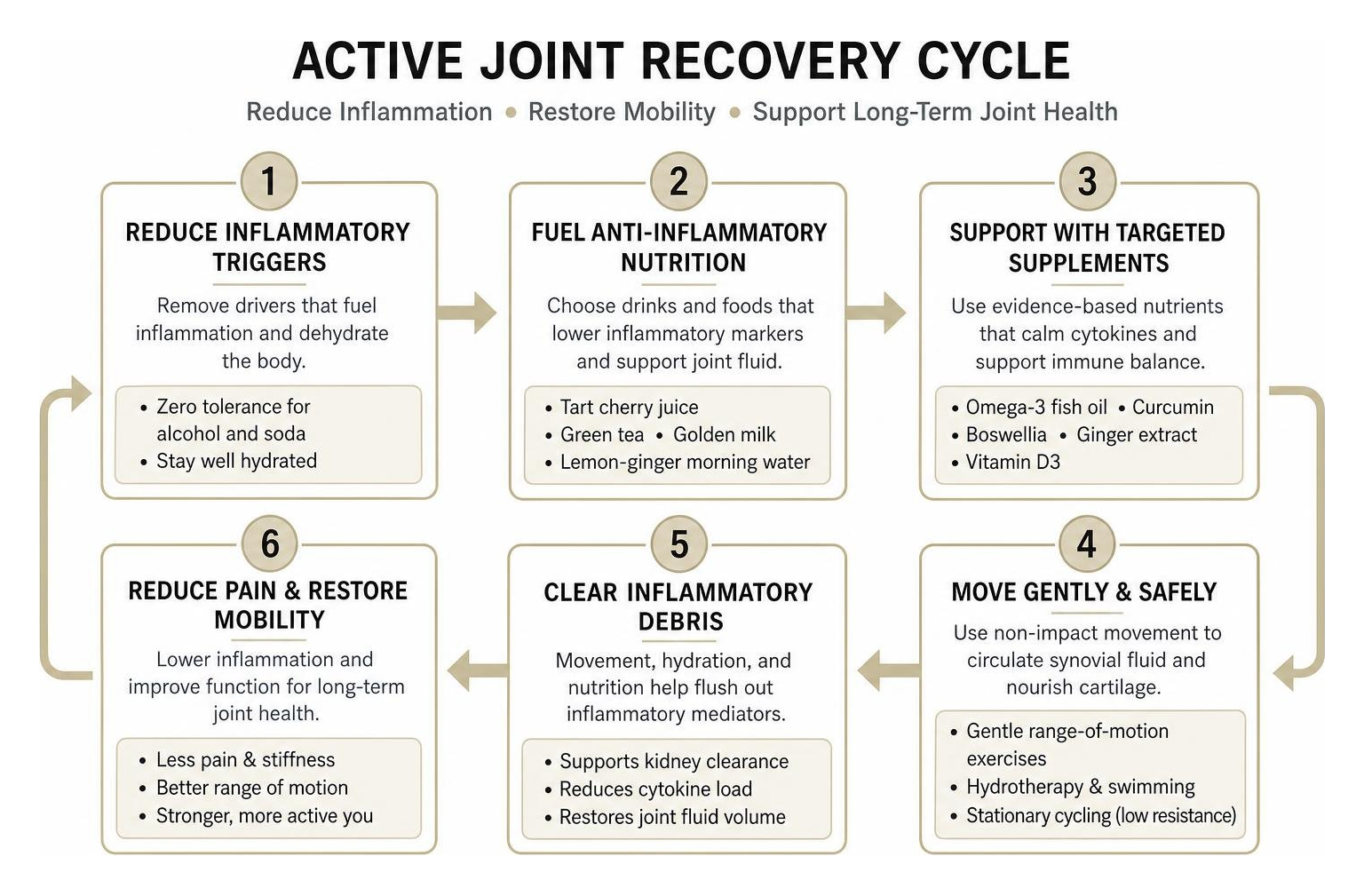
- Zero Tolerance for Alcohol and Soda: Alcohol impairs liver detoxification pathways and dehydrates soft tissues, while sugary sodas drive rapid cytokine surges.
Targeted Supplements and Strategic Movement Protocols
Combining targeted nutraceuticals with gentle, non-impact movement helps clear inflammatory debris from the joint capsule while restoring functional mobility.
High-Impact Supplements for Fast-Acting Cytokine Control
While a balanced diet provides the foundation, therapeutic doses of specific supplements can accelerate your body’s anti-inflammatory response:
- Omega-3 Fish Oil (EPA/DHA): Taking 600 to 1,000 mg of concentrated fish oil daily helps relieve joint stiffness, tenderness, pain, and swelling by replacing pro-inflammatory arachidonic acid in cell membranes.
- Standardized Curcumin (95% Curcuminoids) with Piperine: Curcumin downregulates nuclear factor-kappa B (NF-κB), a master switch for the inflammatory response. Because curcumin is poorly absorbed on its own, always select formulations paired with piperine (black pepper extract), which enhances systemic bioavailability by up to 2,000%.
- Boswellia Serrata (Frankincense Extract): Boswellic acids (particularly AKBA) uniquely inhibit 5-lipoxygenase (5-LOX), an enzyme responsible for producing inflammatory leukotrienes. Clinical studies demonstrate that Boswellia can ease joint discomfort in as little as 7 days.
- Ginger Root Extract: Gingerols and shogaols exhibit dual inhibitory effects on both the COX and LOX inflammatory pathways, serving as a gentle, gastro-protective botanical adjunct.
- Vitamin D3: Vitamin D regulates immune function, and deficiencies are closely linked to increased severity in both osteoarthritis and rheumatoid arthritis flares.
Safe Movement: Maintaining Joint Mobility Without Aggravating Flares
A common misconception is that an inflamed joint should remain completely still. While you must avoid high-impact jumping or heavy resistance training during a flare, complete immobilization causes synovial fluid to stagnate, leading to worsening stiffness and muscle atrophy.
All adults, including those with joint conditions, should aim for at least 150 minutes of moderate physical activity per week, broken into manageable daily sessions. During an active flare, prioritize safe, non-weight-bearing movement:
- Gentle Range-of-Motion (ROM) Exercises: Perform slow, unweighted joint circles, seated leg extensions, or pendulum swings within a pain-free range to circulate synovial fluid and deliver nutrients to avascular cartilage.
- Hydrotherapy and Swimming: Water buoyancy removes up to 90% of your body weight, allowing you to move inflamed hip, knee, and ankle joints freely without mechanical friction or gravitational stress.
- Stationary Cycling with Low Resistance: A smoothly pedaled stationary bike encourages continuous knee and hip flexion, flushing joint effusion without jarring impacts.
- Short, Flat Walking Sessions: When managing conditions like knee osteoarthritis, short 10-minute walks on flat, shock-absorbing surfaces are far better than a single, exhausting 45-minute trek.
Long-Term Joint Recovery and Advanced Clinical Interventions

When joint inflammation transitions from an occasional acute annoyance into chronic, persistent discomfort, foundational lifestyle habits must be paired with durable, modern medical solutions.
Lifestyle Foundations: Sleep Optimization and Weight Reduction
Long-term joint health relies heavily on metabolic and physical balance. Two lifestyle pillars have a profound impact on systemic inflammation:
- Sleep Optimization: Sleep deprivation directly fuels the inflammatory cascade. Research confirms that sleeping fewer than 6 hours per night raises systemic CRP levels within just one week. During deep slow-wave sleep, your body downregulates cortisol, releases growth hormone, and repairs articular micro-damage. Aim for 7 to 9 hours of uninterrupted sleep in a cool, dark room.
- Targeted Weight Reduction: Your joints are biomechanical load-bearers. Biomechanical studies demonstrate that for every single pound of body weight you lose, you eliminate 4 pounds of mechanical pressure off your knee joints with every step. Furthermore, adipose tissue acts as an active endocrine organ that secretes inflammatory adipokines. Losing even 5% of your total body weight (for example, 12 pounds for a 250-pound person) significantly reduces arthritis pain, improves functional mobility, and calms systemic inflammation.
For a broader clinical perspective on how systemic factors influence joint tissue, see this overview on joint inflammation mechanics and how clinicians approach connective tissue care.
Overcoming Chronic Inflammation with Cellular-Level Treatments
When conservative at-home measures, dietary shifts, and physical therapy are no longer enough to control chronic joint flares, patients often find themselves stuck between repetitive steroid injections and invasive joint replacement surgery.
Corticosteroid injections can provide temporary relief, but repeated use carries documented risks of cartilage degradation, tendon weakening, and diminishing returns over time. Understanding the contrast between temporary fixes vs long-term relief is critical for protecting your joints for years to come.
At JointGlow, we offer an evidence-based alternative designed to solve chronic joint inflammation at its biological root. We provide non-invasive, Medicare Part B (Excludes Medicare Advantage) covered Low-Dose Radiotherapy (LDRT) for chronic joint pain.
Rather than masking symptoms or surgically removing joint structures, LDRT utilizes ultra-low, targeted therapeutic energy doses to biologically reset inflammatory cells within the synovial tissue. This process suppresses overactive macrophages, curbs inflammatory cytokines, and delivers rapid, durable pain relief without surgery, anesthesia, or downtime.
To explore our complete range of non-surgical treatments and discover how we target persistent joint pain, take a moment to understand the underlying science of inflammation at the cellular level.
Frequently Asked Questions About Joint Inflammation Relief
What is the fastest drink to flush joint inflammation?
The most effective fast-acting beverage is unsweetened tart cherry juice concentrate diluted in water. Rich in specific anthocyanins, it has been shown to reduce inflammatory blood markers and ease joint stiffness within hours of ingestion. Pairing this with continuous daily hydration (2.5 to 3 liters of water) and antioxidant-rich green tea provides the fastest natural fluid-based inflammation flush.
When does joint swelling require urgent medical attention?
You should seek immediate emergency medical care if your joint swelling is accompanied by a high fever, chills, significant skin redness, severe heat radiating from the capsule, sudden inability to bear weight, or numbness below the joint. These red-flag symptoms may point to septic arthritis (a medical emergency caused by an active joint infection) or an acute structural tear.
How long does it take for systemic inflammation markers like CRP to normalize?
A well-executed 7-day protocol combining clean anti-inflammatory nutrition, targeted omega-3 and curcumin supplementation, 7 to 9 hours of sleep, and gentle hydration typically produces a 15% to 25% subjective reduction in flare symptoms. However, complete normalization of circulating laboratory markers like C-reactive protein (CRP) and erythrocyte sedimentation rate (ESR) generally requires 8 to 12 weeks of consistent, long-term intervention.
Conclusion: Building a Lasting Path to Pain-Free Mobility
Calming an acute joint flare requires a systematic, layered approach: act immediately in the first 24 hours with cold therapy, offloading, and targeted hydration; eliminate inflammatory dietary triggers; support your body with evidence-based botanical extracts; and maintain gentle, non-weight-bearing mobility.
However, if persistent swelling, morning stiffness, and chronic joint pain continue to limit your daily life, you do not have to settle for endless cycles of pain pills or invasive surgery. We invite you to explore our advanced, non-invasive therapies and review the LDRT results timeline to see how a biological reset can help you reclaim lasting, pain-free movement.
