Understanding the Root Causes of Finger Swelling and Pain
To reduce finger joint inflammation quickly, start with cold therapy for acute throbbing, wear compression gloves overnight to ease morning stiffness, perform gentle tendon-gliding exercises to keep synovial fluid moving, and apply a topical NSAID gel directly over the swollen joints. These measures calm the inflammatory cascade before it becomes a chronic cycle.
Finger joints are intricate mechanical structures. Every hand contains dozens of tiny ligaments, tendons, and cartilage cushions working together across the distal interphalangeal (DIP) joints near the fingertips, proximal interphalangeal (PIP) joints in the middle, metacarpophalangeal (MCP) knuckles, and the carpometacarpal (CMC) joint at the base of the thumb. When inflammation strikes, the synovial lining enclosing these joints swells, filling the space with excess fluid that creates pressure, throbbing discomfort, and restricted mobility.
In the United States, osteoarthritis affects roughly 33 million adults, making it the most frequent culprit behind chronic hand discomfort. However, inflammation is not a one-size-fits-all condition. It can stem from wear-and-tear mechanical breakdown, systemic autoimmune attacks, crystal accumulation, or repetitive microtrauma. Recognizing early signs of arthritis allows you to intervene before joint architecture experiences permanent changes.
Differentiating Osteoarthritis, Rheumatoid Arthritis, and Dactylitis
Determining why your fingers hurt is key to finding the right remedy. Different inflammatory conditions present with distinct mechanical and immunological signatures:
- Osteoarthritis (OA): Primarily a degenerative process where protective cartilage wears thin. It commonly targets the DIP joints (producing hard, bony enlargements known as Heberden nodes), the PIP joints (Bouchard nodes), and the base of the thumb. Morning stiffness in OA is usually brief, resolving in less than 30 minutes once the hands get moving.
- Rheumatoid Arthritis (RA): An autoimmune disorder where the body’s immune defenses mistakenly attack the synovial membrane lining the joints. RA typically attacks symmetrically—affecting the MCP knuckles and PIP joints on both hands simultaneously—while sparing the DIP joints at the fingertips. Morning stiffness from RA is persistent, frequently lasting well over an hour, and is accompanied by warmth, soft “boggy” swelling, and systemic fatigue.
- Psoriatic Arthritis and Dactylitis: Psoriatic disease can cause diffuse, uniform inflammation throughout an entire digit—a phenomenon known as “sausage fingers.” Reviewing a clinical guide to dactylitis symptoms reveals that this intense swelling involves not just the joint capsules, but surrounding flexor tendons and soft tissues as well.
- Gout: Caused by the crystallization of uric acid within the joint space, gout flares arrive abruptly—often overnight—producing excruciating pain, fiery redness, and exquisite tenderness, sometimes targeting individual finger joints.
Common Overuse and Lifestyle Triggers
Aside from chronic systemic diseases, daily habits can provoke localized inflammatory flares. Repetitive gripping, long hours of typing without ergonomic support, or sudden intense manual tasks create micro-tears in supporting tendons and irritate joint capsules.
Furthermore, lifestyle factors play a major role. Consuming high-sodium meals can exacerbate fluid retention, causing morning puffiness in the digits. Cold weather constricts peripheral blood vessels, reducing synovial circulation and intensifying stiffness. Diving into the cellular mechanics of inflammation shows how localized tissue distress recruits pro-inflammatory cytokines and macrophages to the joint capsule, keeping the tissue locked in a continuous cycle of swelling and discomfort.
How to Reduce Joint Inflammation in Fingers at Home
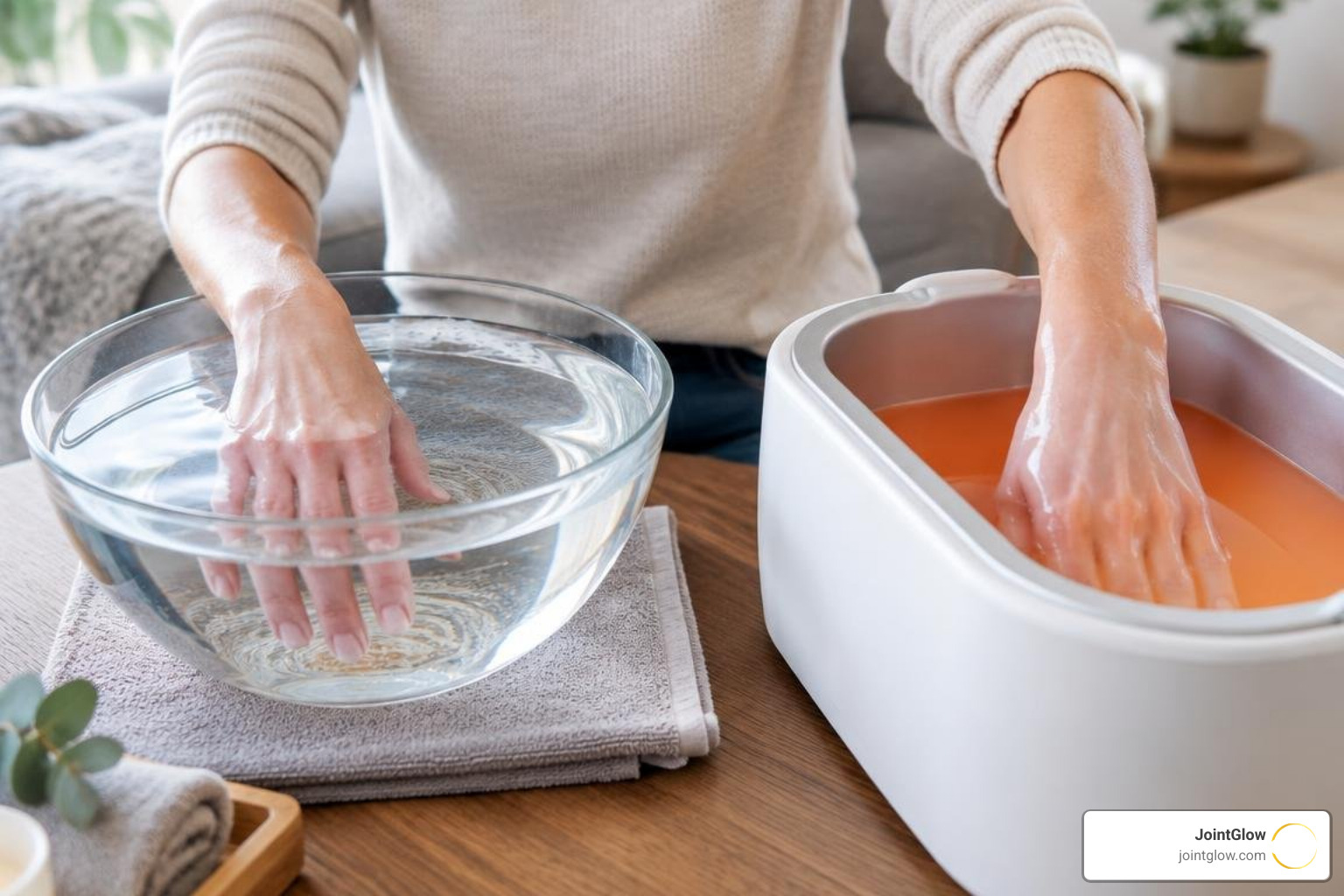
When joint pain flares up, having a dependable routine at home can soothe acute irritation and restore daily function. A modified rest, ice, compression, and elevation approach helps drain excess synovial fluid while keeping the tissues calm.
Quick Relief with Temperature Therapy and Contrast Baths
Temperature management is one of the simplest and most accessible self-care strategies, but applying the wrong temperature at the wrong time can sometimes delay relief.
| Method | Best Used For | Application Time | Primary Physiological Benefit |
|---|---|---|---|
| Ice Packs / Cold Wraps | Acute flares, post-activity swelling, hot and throbbing joints | 10–15 minutes | Constricts blood vessels (vasoconstriction), numbs sharp nerve pain, reduces swelling |
| Warm Water Soaks | Morning stiffness, cold hands, pre-exercise loosening | 5–10 minutes | Dilates blood vessels, relaxes tight connective tissues, boosts circulation |
| Paraffin Wax Therapy | Deep, chronic joint stiffness without active heat/redness | 15–20 minutes | Delivers penetrating heat that improves elasticity and joint flexibility |
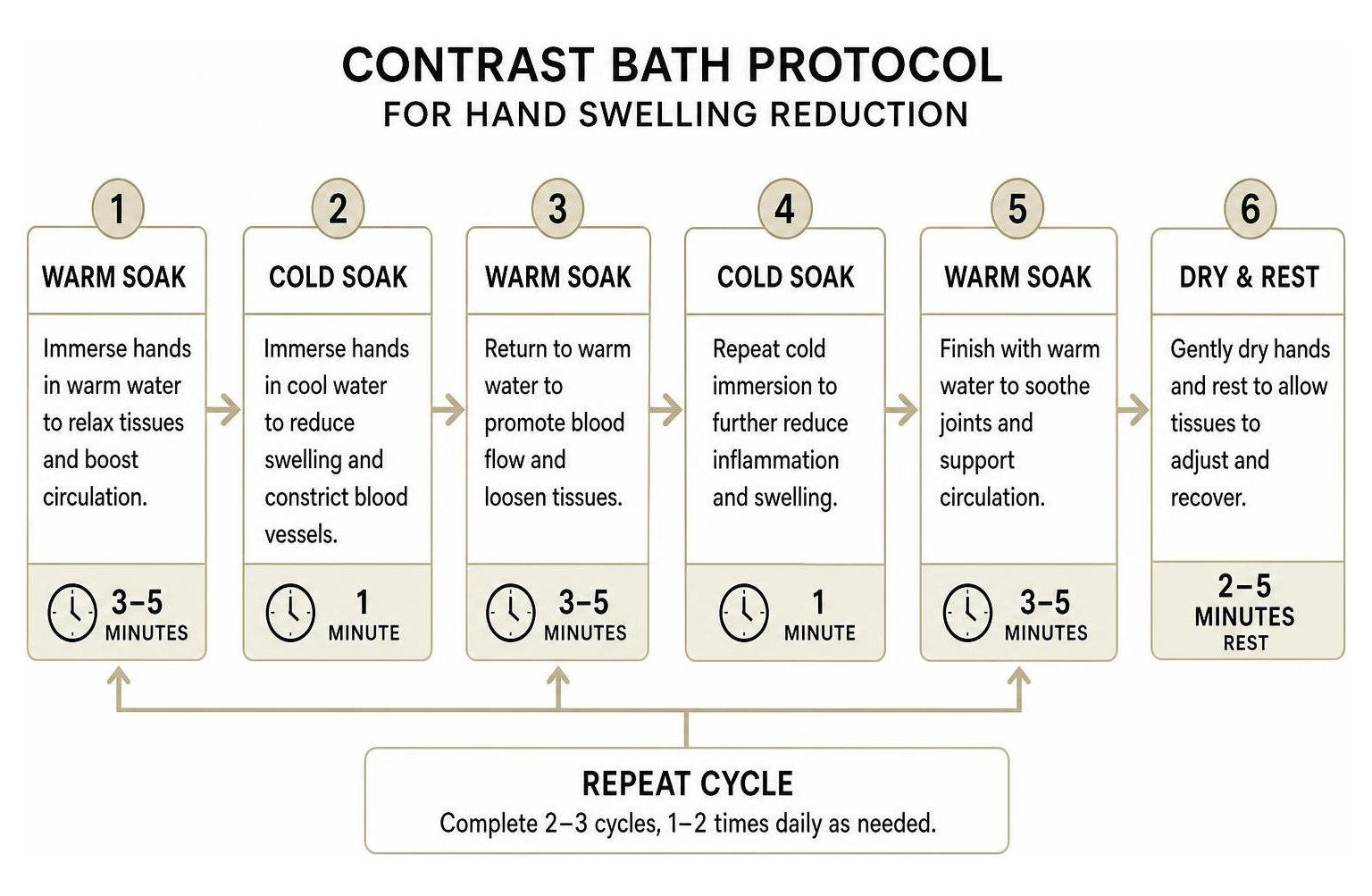
| Contrast Baths | Stubborn, sluggish fluid retention and chronic puffiness | 15–20 minutes alternating | Creates a “vascular pump” effect to flush inflammatory byproducts |
To perform a contrast bath, prepare two bowls: one with comfortable warm water (100°F to 110°F) and one with cool water (59°F to 70°F). Submerge your hands in the warm water for 3 to 4 minutes, switch to the cold water for 1 minute, and repeat this cycle 4 times, always finishing on the warm soak to keep tissues supple.
Compression Gloves, Night Splints, and Topical Anti-Inflammatories
Supportive tools provide continuous structural and vascular assistance throughout the day and night:
- Compression Gloves: Form-fitting elastic gloves apply gentle, continuous pressure over the fingers and palms. Research indicates that six out of seven studies evaluating compression gloves reported measurable pain reduction, with four studies showing significant decreases in nighttime pain. In one trial, morning stiffness practically disappeared in most participants after wearing compression gloves from bedtime through morning for just one week.
- Topical NSAIDs and Analgesics: Applying a topical non-steroidal anti-inflammatory drug (NSAID) gel—such as diclofenac—delivers active medication directly through the thin skin of the fingers into the joint capsule. Head-to-head clinical reviews reveal that topical NSAIDs perform similarly to oral anti-inflammatory pills for hand osteoarthritis, but with a substantially lower risk of systemic gastrointestinal side effects.
- Supportive Splinting: For thumb base osteoarthritis, a low-profile CMC splint stabilizes the joint during pinching and gripping activities, taking mechanical stress off the cartilage. Using targeted relief strategies and understanding how to soothe finger inflammation empowers you to prevent minor daytime aches from becoming debilitating flares.
Physical Therapy and Safe Hand Exercises

When joints feel tender, the natural instinct is to stop moving them entirely. However, prolonged immobility leads to joint capsule contracture, tendon stiffness, and muscle atrophy. Motion is lotion for your joints: gentle movement stimulates the circulation of synovial fluid, delivering nutrients directly to avascular cartilage.
In pooled clinical evidence across multiple trials covering hundreds of participants, structured hand exercise programs produced measurable improvements in joint comfort and reduced hand stiffness by roughly 7%.
How to Reduce Joint Inflammation in Fingers with Daily Mobility Exercises
Perform these gentle range-of-motion exercises twice daily. Always move slowly within a comfortable range, avoiding sharp pain:
- Tendon Glides (Fist to Open Hand): Start with an open hand, fingers straight. Bend your fingers into a hook fist (fingertips touching the pads at the base of the fingers), then a full flat fist, and return to an open hand. Repeat 8 to 10 times.
- Tabletop Knuckle Bends: Keeping your fingers completely straight, bend only at the MCP knuckles to form a 90-degree “L” shape. Hold for 3 seconds and release.
- Finger Abduction (Spread and Close): Place your hand flat on a table. Gently spread your fingers as wide apart as comfortable, hold for 2 seconds, and draw them back together. Repeat 5 to 10 times.
- Thumb Opposition: Gently touch the tip of your thumb to the tip of each finger, one at a time, forming an “O” shape with each digit.
- Soft Putty or Sponge Squeezes: Using soft therapeutic putty or a damp sponge, perform light isometric squeezes to preserve grip strength without overloading irritated joint structures.
Ergonomic Adjustments to Protect Finger Joints
Modifying the way you handle everyday items drastically cuts cumulative joint strain:
- Widen Your Grip: Wrap foam tubing around thin utensils, toothbrushes, and pens. A thicker handle requires less pinch force from your small finger joints.
- Leverage Adaptive Kitchen Tools: Use automatic jar openers, rocker knives, and silicone grip pads. Learn about practical approaches for non-surgical finger arthritis care to take the struggle out of daily household tasks.
- Optimized Workstations: If typing triggers swelling, switch to an ergonomic split keyboard that maintains a neutral wrist posture, and take a 30-second micro-break every 20 minutes to shake out and rest your hands.
Long-Term Anti-Inflammatory Strategies and Medical Care
Managing chronic finger swelling requires looking beyond short-term fixes and addressing the body’s broader inflammatory baseline.
How to Reduce Joint Inflammation in Fingers Through Targeted Nutrition
What you put on your plate impacts circulating inflammatory markers throughout the entire body:
- Curcumin and Turmeric Extracts: A systematic review and meta-analysis published in Frontiers in Immunology demonstrated that curcumin and standardized turmeric extracts (at doses ranging from 800 to 2,000 mg daily) performed similarly to ibuprofen (800 to 1,200 mg daily) for reducing joint pain and stiffness over 4 to 6 weeks, while producing fewer adverse digestive events. Always choose formulations combined with piperine (black pepper extract) to enhance absorption.
- Omega-3 Fatty Acids: High-potency EPA and DHA from wild fatty fish or purified fish oil supplements actively downregulate the production of inflammatory prostaglandins and leukotrienes.
- Boswellia Serrata: Also known as Indian frankincense, this botanical resin inhibits the 5-LOX enzyme, helping preserve joint comfort.
- Dietary Patterns: Emphasize a Mediterranean-style diet centered on leafy greens, berries, extra virgin olive oil, nuts, and seeds. Concurrently, minimize ultra-processed foods, refined sugars, and excessive dietary sodium to prevent fluid stagnation.
Red Flags and Clinical Treatment Options
While conservative at-home self-care resolves many flares, certain symptoms require professional evaluation. Consult a physician or rheumatologist immediately if you experience:
- Sudden, extreme swelling accompanied by intense redness, severe warmth, or fever (potential signs of septic arthritis or infection).
- A finger joint that locks, catches, or cannot be straightened (such as severe trigger finger).
- Progressive angular joint deformity or rapid loss of functional grip strength.
- Unexplained systemic symptoms like unintentional weight loss, skin rashes, or extreme chronic exhaustion.
When self-care, splints, and medications fail to provide durable relief, modern medicine offers effective non-surgical alternatives. While standard cortisone injections offer short-term symptom relief, repeated steroid exposure can weaken local tendon structures over time.
For patients seeking lasting, non-invasive solutions for chronic arthritic pain, JointGlow provides Medicare Part B (Excludes Medicare Advantage) covered low-dose radiotherapy (LDRT). By utilizing ultra-low doses of localized radiation, this therapy resets pro-inflammatory immune cells within the joint capsule, calming chronic inflammation and restoring mobility without incisions, downtime, or systemic medication side effects.
Frequently Asked Questions About Finger Joint Inflammation
What is the fastest way to relieve sudden finger joint swelling at home?
The quickest at-home protocol combines cold therapy with elevation and topical medication. Apply an ice pack wrapped in a thin towel to the affected fingers for 10 to 15 minutes, keep your hand elevated above the level of your heart using a pillow to encourage fluid drainage, and gently rub a topical diclofenac gel over the joint capsule. Avoid forceful gripping until the acute throbbing subsides.
How can I tell if my finger swelling is from osteoarthritis or rheumatoid arthritis?
Osteoarthritis usually affects the DIP joints closest to the fingernails and the base of the thumb, often feels bony or hard, and creates morning stiffness that clears within 20 to 30 minutes. Rheumatoid arthritis typically presents symmetrically on both hands, targets the middle PIP joints and MCP knuckles with soft, warm, puffy swelling, and causes morning stiffness lasting an hour or longer alongside general fatigue. A physician can confirm the diagnosis using physical exams, targeted X-rays, and blood tests for inflammatory markers.
Do compression gloves really help reduce finger stiffness overnight?
Yes. Clinical studies confirm that wearing snug, breathable compression gloves overnight improves microcirculation, reduces nocturnal interstitial fluid accumulation, and significantly eases morning stiffness. Make sure the gloves provide gentle, uniform compression without pinching or causing numbness at the fingertips.
Conclusion
Living with sore, puffy fingers can turn routine tasks—like buttoning a shirt, turning a key, or typing an email—into frustrating hurdles. By combining temperature therapy, compression gloves, gentle tendon-gliding exercises, and an anti-inflammatory dietary routine, you can proactively protect your hand function and calm daily flares.
When conservative at-home measures are no longer enough to keep joint pain at bay, you don’t have to jump straight to invasive surgery. Exploring advanced non-invasive solutions like low-dose radiotherapy can help break the cycle of chronic inflammation. If you are ready to regain comfortable grip strength and lasting mobility, learn what to expect during your care journey by viewing our expected recovery timeline for lasting relief and take the next step toward pain-free hands.
