Considering LDRT After Years of Joint Pain
If you are an active adult aged 50 or over, have lived with joint pain for years, and have already seen a specialist, you may be wondering whether another treatment is worth your time—especially after joint surgery or while trying to avoid it. If you have already tried medication, physical therapy, or injections without lasting relief, Low Dose Radiotherapy (LDRT) may be another option to discuss with a JointGlow physician. JointGlow performs only LDRT, which targets persistent joint inflammation.
I’m Dr. Koneru. Here, I’ll explain how LDRT works so you can decide whether to ask about it after other treatments have not provided lasting relief.

Chronic joint discomfort affects millions of households across the nation. In fact, approximately 25% of adults in the U.S. experience frequent knee pain that limits their daily activities. Persistent inflammation can make getting out of bed or climbing stairs painful and stiff; you are far from alone.
When previous treatments have not provided lasting relief, understanding LDRT’s approach to inflammation can help you decide whether to seek a candidacy review.
Considering LDRT After Other Options

If you have already tried oral pain medicines without lasting relief, LDRT may be another option to discuss with a JointGlow physician.
JointGlow performs only LDRT. A physician reviews your symptoms, diagnosis, and prior treatments to determine whether you are a candidate. If supplements or topical remedies are among the options you have already tried, include them in your treatment history; they are not services JointGlow provides.
| Previously Tried Supplement / Topical Remedy | JointGlow Service Clarification | LDRT Candidacy | Treatment History |
|---|---|---|---|
| Turmeric (Curcumin)—if already tried | JointGlow provides LDRT, not this supplement | Prior supplement use does not confirm LDRT candidacy | Include prior use in your physician review |
| Boswellia Serrata—if already tried | JointGlow provides LDRT, not this supplement | Prior supplement use does not confirm LDRT candidacy | Include prior use in your physician review |
| Omega-3 Fatty Acids—if already tried | JointGlow provides LDRT, not this supplement | Prior supplement use does not confirm LDRT candidacy | Include prior use in your physician review |
| Glucosamine & Chondroitin—if already tried | JointGlow provides LDRT, not these supplements | Prior supplement use does not confirm LDRT candidacy | Include prior use in your physician review |
| Capsaicin (Topical)—if already tried | JointGlow provides LDRT, not this topical treatment | Prior topical treatment does not confirm LDRT candidacy | Include prior use in your physician review |
How LDRT Calms Joint Inflammation

Chronic joint pain can persist when the immune system keeps sending inflammatory signals to a joint long after the original insult. Those ongoing signals produce pain, stiffness, and limited movement. LDRT interrupts that signaling at the cellular level with a precise, ultra-low dose of energy, calming the inflammatory response and allowing the joint to begin recovering.
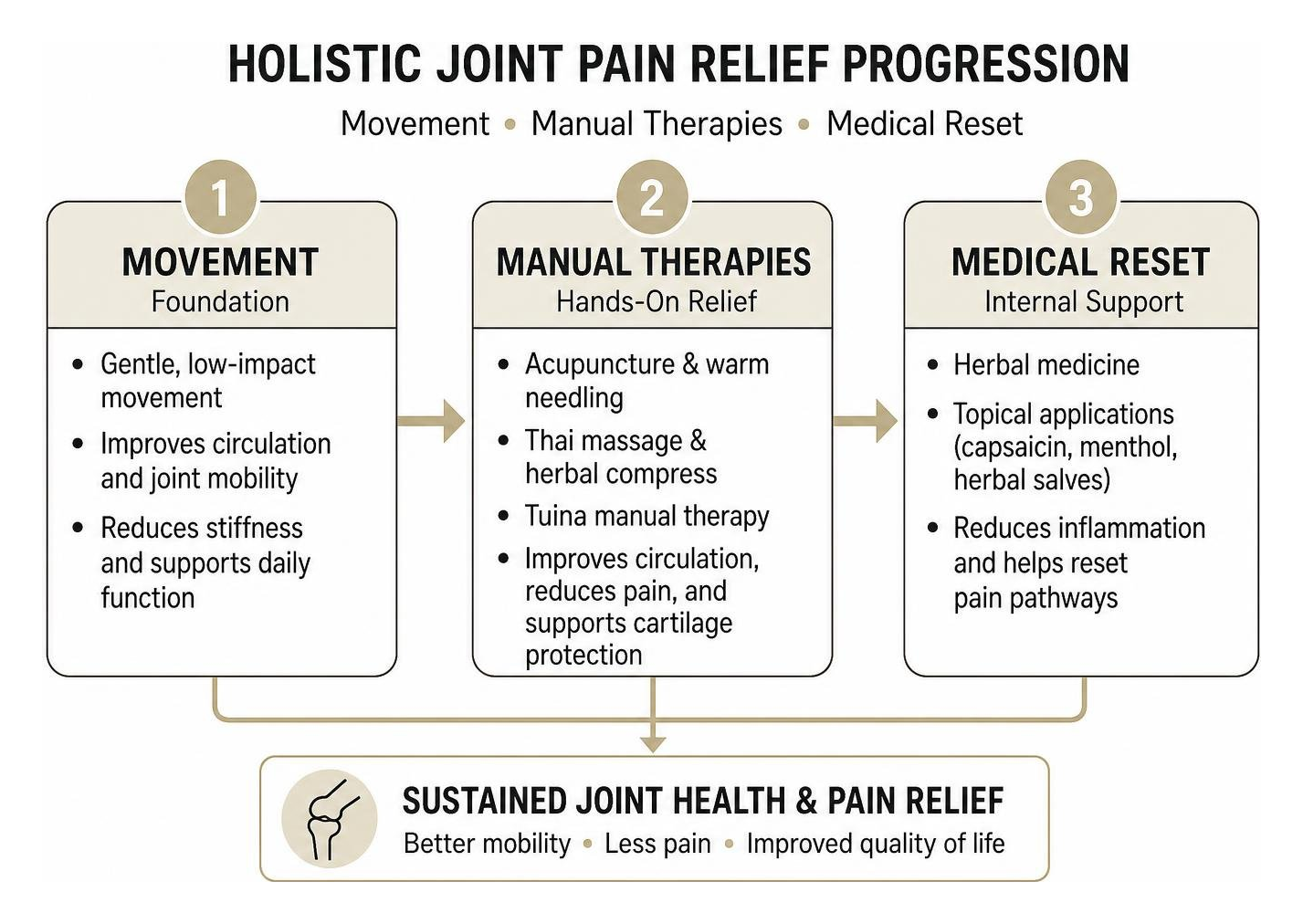
What Happens During an LDRT Session
There are no needles. No anesthesia. No recovery period. Each session takes about five minutes. You walk in, lie down, and walk right back out.
Non-Surgical Clinical Alternatives to Injections and Surgery
If you have already tried medication, physical therapy, or injections and still have persistent joint pain, LDRT may be worth discussing—particularly if you are trying to avoid joint surgery.
If Injections Have Not Provided Lasting Relief
If you have already tried injections into the joint, you may have experienced only temporary relief.
If you have already tried hyaluronic acid (gel) injections, you may have experienced limited relief. If you are comparing long-term relief to temporary steroid injections, ask a JointGlow physician whether LDRT’s approach to ongoing inflammation is appropriate for your diagnosis and treatment history.
Low-Dose Radiotherapy for Targeted Joint Inflammation Reset
At JointGlow, we offer an advanced, non-invasive therapeutic approach: Low-Dose Radiotherapy (LDRT). LDRT sends a precise, ultra-low dose of energy to the affected joint, calming the inflammatory response at the cellular level.
Understanding the cellular mechanisms of low-dose radiation therapy helps explain its approach to persistent inflammation. The immune system can continue signaling a joint long after the original insult, producing persistent pain, stiffness, and limited movement. LDRT interrupts that signaling at the cellular level with a precise, ultra-low dose of energy, calming the inflammatory response and allowing the joint to begin recovering.
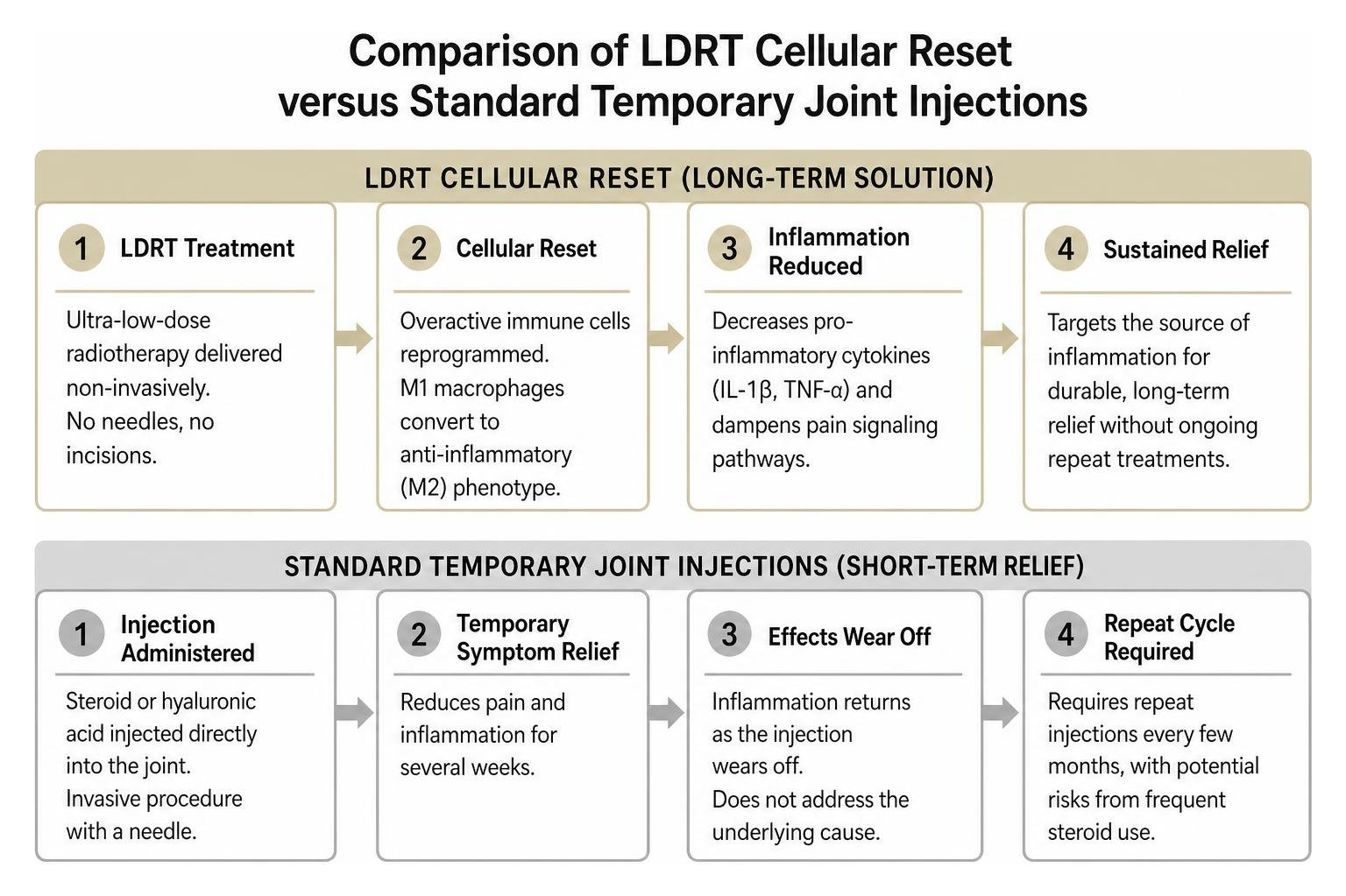
This therapy is:
- Non-Invasive: There are no needles. No anesthesia. No recovery period. Each session takes about five minutes. You walk in, lie down, and walk right back out.
- Drug-Free: No systemic side effects reported in clinical studies.
- Covered by Medicare Part B (Excludes Medicare Advantage): Accessible and established as a routine, validated care pathway.
Whether you are seeking deep relief for knee osteoarthritis without surgery, need non-invasive care for managing hand osteoarthritis stiffness, or are exploring non-surgical care for shoulder bursitis, LDRT works to biologically reset persistent joint inflammation at its source.
Frequently Asked Questions About LDRT
Could LDRT be an option after other knee arthritis treatments have not helped?
LDRT may be an option for persistent knee osteoarthritis pain after you have tried medication, physical therapy, or injections without lasting results. It targets ongoing inflammation at the cellular level. A JointGlow physician reviews your history and confirms whether you are a candidate.
Can I ask about LDRT if I am trying to avoid joint surgery?
Yes. JointGlow identifies people who have tried other treatments without lasting results and want to avoid surgery as potential LDRT candidates. A physician must review your diagnosis and treatment history to confirm whether LDRT is appropriate for you.
Conclusion
When joint pain persists after other treatments, LDRT offers a different approach: calming the immune signals that sustain inflammation. JointGlow uses a precise, ultra-low dose of energy to interrupt that process at the cellular level and allow the joint to begin recovering.
If you have lived with pain for years and are weighing another option after specialist care, learn about LDRT at JointGlow and ask whether you are a candidate.
The JointGlow center is located in Winter Park, FL. JointGlow also partners with 6 independently operated medical practices certified to offer JointGlow services in Lafayette, LA; Lake City, FL; New Iberia, LA; Opelousas, LA; and Oviedo, FL. Patients can find LDRT services certified by JointGlow at these locations.
