Considering LDRT After Years of Joint Pain
If you are an active adult aged 50 or over who has lived with joint pain for years, already seen a specialist, and had surgery or is trying to avoid it, you may be wondering whether another treatment is worth your time. Low Dose Radiotherapy (LDRT), the only service JointGlow performs, targets the inflammatory signaling behind persistent joint pain.
- Could LDRT be appropriate for your diagnosis and previous treatment history?
- Each session takes approximately five minutes: walk in, lie down, and walk right back out, with no needles, no anesthesia, and no recovery period. How much time does a full course take?
- How will your clinician assess changes in pain and movement?
- What safety considerations apply to you?
With conditions such as osteoarthritis, chronic joint pain involves an inflammatory process. The immune system can continue signaling a joint long after the original injury or irritation, producing persistent pain, stiffness, and limited movement.
If pain management, injections, or surgery have not provided lasting relief—or you are trying to avoid surgery—the next question is whether LDRT fits your diagnosis, medical history, and goals for staying active.

Why Joint Pain Can Persist After Years of Treatment
Chronic joint pain involves an inflammatory process, not simply a mechanical problem. After an injury or irritation, immune signals that should settle can remain active in the joint. That continuing response can leave you with pain, stiffness, and restricted movement long after the original injury.
Persistent immune signaling helps explain why stiffness and limited movement can continue despite treatments you have already tried. Learning how LDRT targets inflammation in knee osteoarthritis can help you discuss whether this approach is appropriate for your joint.

Tracking Pain and Movement Before and After LDRT
Ask how your clinician will track pain, stiffness, and everyday movement before and after LDRT. The tools below measure how you feel and what you can do, helping you assess whether treatment is making a meaningful difference:
- The Western Ontario and McMaster Universities Osteoarthritis Index (WOMAC): A gold-standard questionnaire evaluating three dimensions: pain severity, joint stiffness, and physical disability during routine tasks like navigating stairs or getting out of a chair.
- Numeric Pain Rating Scale (NPRS) and Visual Analog Scale (VAS): A simple 0-to-10 scale where 0 represents no pain and 10 represents the worst imaginable pain, ideal for rapid daily tracking.
- Brief Pain Inventory Short Form (BPI-SF): Evaluates pain intensity alongside how significantly discomfort interferes with sleep, mood, walking, and social engagement.
- SF-36 and SF-12 Health Surveys: Questionnaires covering several aspects of health, including broader health-related quality of life, physical functioning, and vitality.
- EQ-5D Visual Analog Scale: A self-rated thermometer scale from 0 to 100 capturing overall perceived health status.
- Objective Functional Measures: Physical tests such as the Timed Up and Go (TUG), Berg Balance Scale (BBS), and the 10-meter walk test measure functional mobility, balance, and walking speed directly.

How LDRT Targets Persistent Joint Inflammation
LDRT interrupts persistent inflammatory signaling at the cellular level. A precise, ultra-low dose of energy calms the inflammatory response and allows the joint to begin recovering. This is the rationale to discuss with your specialist when previous treatment has not brought lasting relief.
| Approach Category | Specific Modalities | Primary Benefits | Safety Considerations & Best Uses |
|---|---|---|---|
| LDRT Mechanism | Precise, ultra-low energy delivered to the affected joint | Calms inflammatory signaling at the cellular level | Discuss whether this approach fits your diagnosed condition |
| LDRT Session Experience | Approximately five minutes per session: walk in, lie down, walk right back out | No recovery period | No needles and no anesthesia |
| LDRT Course | 6–10 sessions over 2–3 weeks | A defined treatment schedule | Confirm the planned course with your clinician |
| LDRT Candidacy | Clinician review of diagnosis and previous treatment history | An individual assessment of whether LDRT is appropriate | Review medical conditions and prior treatment in the same joint area |
Considering LDRT After Treatments You Have Already Tried
If you have already tried medication, supplements, or physical therapy without lasting relief, bring that history to your LDRT evaluation. Your diagnosis, medical conditions, and previous treatments help the clinician determine whether LDRT is appropriate.
Is LDRT Worth Considering After Physical Therapy?
If you have already tried physical therapy and still live with persistent joint pain, ask whether ongoing inflammatory signaling makes LDRT an option for your diagnosed condition.

Previous physical therapy is part of your treatment history, not a service JointGlow provides. The LDRT discussion should focus on whether targeting inflammation could help with the activities pain still limits.
Considering LDRT After Pain Management
If you have already tried pain medication without lasting relief, or are trying to avoid further reliance on it, ask your specialist whether LDRT is appropriate for your diagnosed joint condition.
Bringing Your Previous Treatment History to an LDRT Evaluation
Bring a record of the pain-management options, injections, and any joint surgery you have already had, including how long relief lasted. This helps the clinician review whether LDRT is a suitable next option.
Non-Invasive LDRT for Long-Term Joint Comfort
If pain management, injections, or surgery have not brought lasting relief—or you are trying to avoid surgery—LDRT may be worth discussing with your specialist. At JointGlow, LDRT is the only service we perform, targeting inflammation behind chronic joint pain.
JointGlow’s website states: “The total energy delivered across all six to ten sessions is less than that of a single standard CT scan.” Learning about the cellular mechanisms of joint inflammation can help you understand the treatment rationale. LDRT interrupts continuing immune signaling at the cellular level. It sends a precise, ultra-low dose of energy to the affected joint, calming the inflammatory response and allowing the joint to begin recovering.
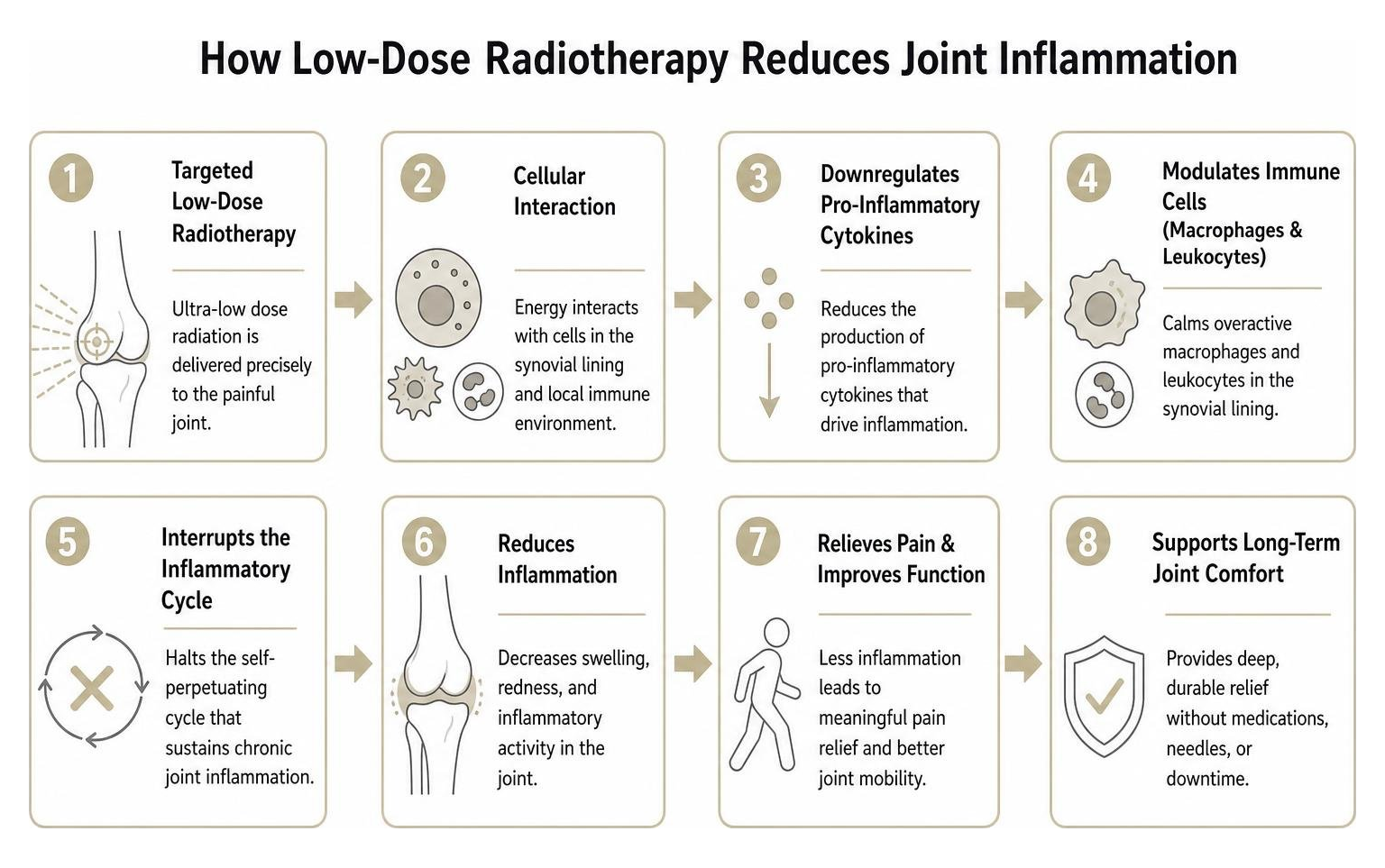
If you are learning how low-dose radiotherapy works, the physical experience is straightforward: there are no needles, no anesthesia, and no recovery period. Each session takes approximately five minutes: you walk in, lie down, and walk right back out. The treatment is painless and non-invasive. JointGlow describes Medicare Part B (Excludes Medicare Advantage) coverage for qualifying patients; confirm your eligibility and coverage before treatment. For active adults aged 50 and over who have lived with pain for years, already seen a specialist, and had joint surgery or are trying to avoid it, an evaluation can help determine whether LDRT is worth considering.
Frequently Asked Questions About Considering LDRT
Could LDRT be appropriate if I have other medical conditions?
Your clinician should review your diagnosis, medical history, and previous treatments before deciding whether LDRT is appropriate. JointGlow’s website states: “No systemic side effects reported in clinical studies.” Here, systemic means affecting the body as a whole. That statement does not replace an individual assessment.
How much time do LDRT sessions take?
Each session takes approximately five minutes. There are no needles, no anesthesia, and no recovery period: you walk in, lie down, and walk right back out. JointGlow describes a course of 6–10 sessions over 2–3 weeks.
When is LDRT worth considering after years of joint pain?
For active adults aged 50 and over who have already seen a specialist and had joint surgery or are trying to avoid it, LDRT may be worth discussing when:
- Chronic joint discomfort limits basic daily activities (walking, dressing, climbing stairs) despite consistent home care.
- Daily pain medications trigger side effects such as stomach distress, elevated blood pressure, or mental fog.
- The patient takes multiple prescriptions (polypharmacy), creating dangerous drug-interaction risks.
- The individual wants to avoid the surgical risks, anesthesia complications, and lengthy rehabilitation associated with joint replacement surgery.
Conclusion: Making an Informed Decision About LDRT
After years of joint pain and specialist care, deciding whether another option is worthwhile means understanding what it targets and whether it fits your history. LDRT addresses persistent inflammatory signaling at the cellular level, calming the response and allowing the joint to begin recovering.
If pain persists after treatments you have already tried, learn more about JointGlow’s LDRT services and ask whether LDRT is appropriate for your diagnosis, previous surgery or surgery-avoidance goals, and the activities you want to return to.
The JointGlow center is located in Winter Park, FL. JointGlow also partners with 6 independently operated medical practices certified to offer JointGlow services in Lafayette, LA; Lake City, FL; New Iberia, LA; Opelousas, LA; and Oviedo, FL. These are places where patients can find LDRT services certified by JointGlow.
