What Sudden, Intermittent Sharp Hip Pain Can Mean for Women
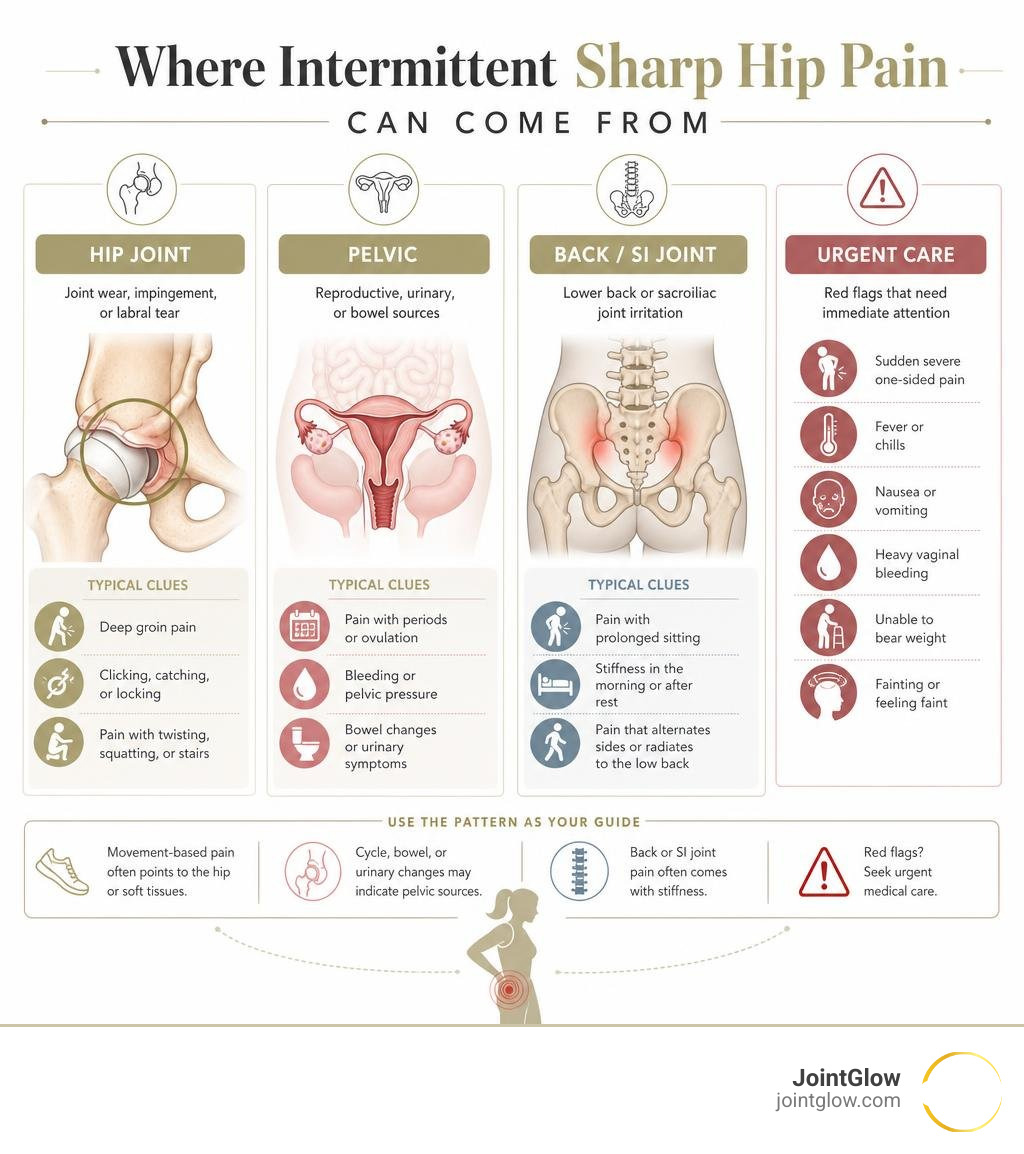
A sudden sharp pain in the hip that comes and goes can come from the hip joint, nearby muscles and tendons, the lower back or sacroiliac joint, or organs in the pelvis and abdomen. Common causes include bursitis or gluteal tendon irritation on the outer hip, hip impingement or a labral tear causing groin pain and catching, and pelvic conditions such as ovulation pain or ovarian cysts.
A useful first clue is the pain pattern:
- Pain with walking, stairs, squatting, or lying on that side often points to a hip or soft-tissue problem.
- Pain with clicking, catching, or deep groin discomfort may involve the joint, including impingement or a labral tear.
- Pain tied to periods, ovulation, bleeding, bowel changes, or urinary symptoms may be referred from the pelvis, bowel, or urinary tract.
- Sudden severe one-sided pain, fever, vomiting, fainting, heavy bleeding, or inability to bear weight needs urgent medical assessment.
Hormones can matter, too. In one study of 50 women with hip impingement and labral tears, average hip pain was higher during menstruation than at other times in the cycle. That does not mean periods are always the cause, but tracking symptoms can give your clinician an important clue.
Intermittent pain is not something to simply “push through,” especially if it keeps returning or limits daily movement. This guide explains how to narrow down the likely source, find safe short-term relief, and know when it is time to seek care.
Root Causes of Sudden, Sharp Hip Pain in Females
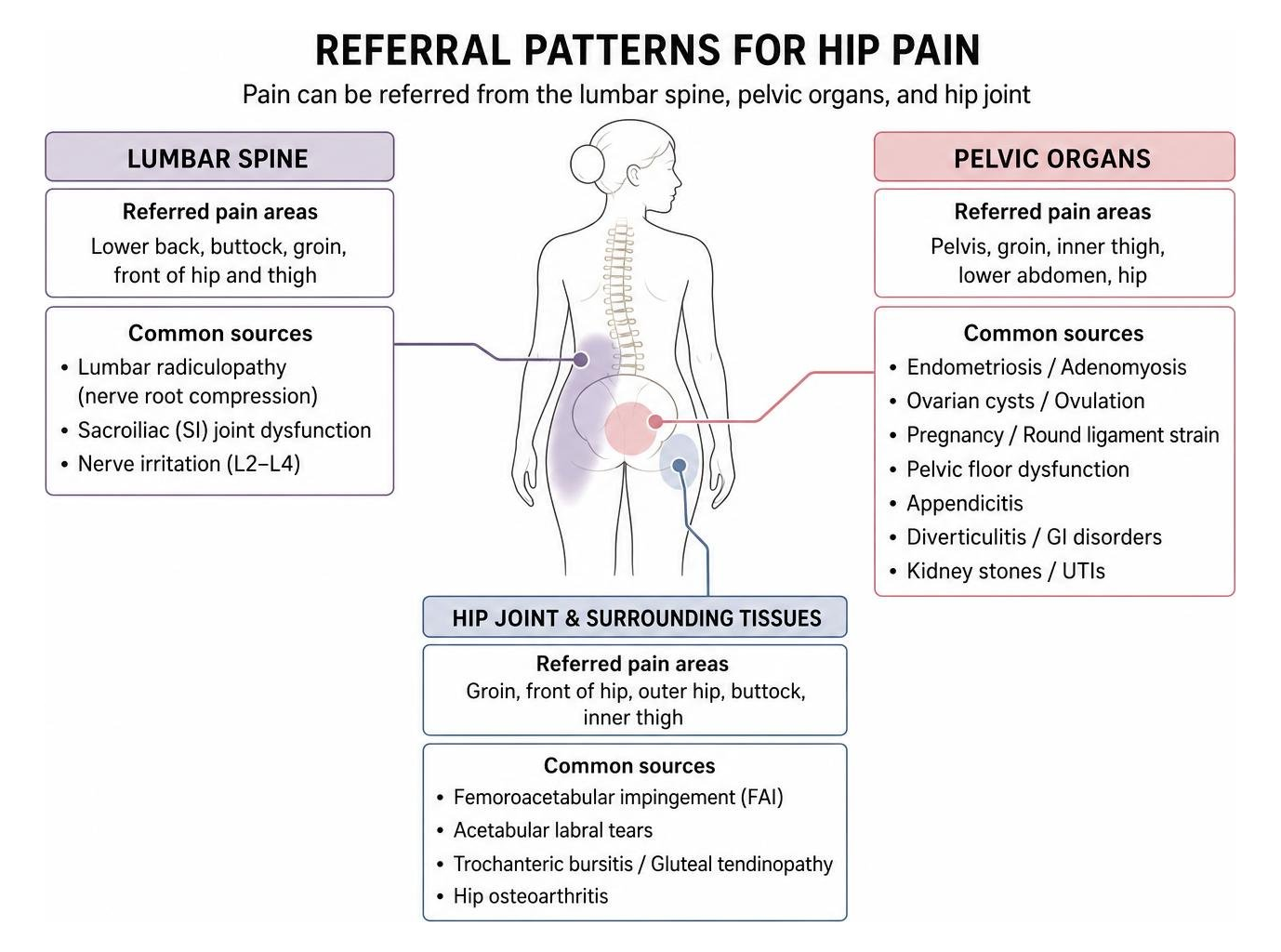
When a sudden sharp pain in the hip comes and goes, female patients often discover that the hip is far more than a simple ball-and-socket joint. The female pelvis is an anatomical crossroads where heavy mechanical loads meet complex reproductive, digestive, and neurological pathways. Because these systems share overlapping nerve networks, a sharp jolt felt near the hip bone might originate inside the joint capsule, or it could be referred from an organ several inches away.

Women naturally have a wider pelvic structure (an increased Q-angle), which alters the biomechanical pull of tendons across the outer hip and increases baseline strain on stabilizing muscles. When structural imbalances, tissue friction, or visceral inflammation occur, they generate sharp, stabbing sensations that appear unpredictably when you pivot, step off a curb, or transition between sitting and standing.
Musculoskeletal Triggers
Mechanical issues within the hip joint and surrounding soft tissues are the most frequent culprits behind intermittent sharp stabbing sensations.
- Femoroacetabular Impingement (FAI): FAI occurs when extra bone develops along the femoral head (cam lesion), the acetabular rim (pincer lesion), or both. During deep flexion—such as squatting, sitting in a low chair, or getting out of a car—the abnormal bone makes contact, creating a sudden, pinching jolt deep in the anterior groin.
- Acetabular Labral Tears: The labrum is a ring of tough fibrocartilage that seals and stabilizes the hip socket. When torn—often secondary to FAI or repetitive twisting motions—it causes intermittent, knife-like groin pain accompanied by a distinct clicking, catching, or giving-way sensation.
- Trochanteric Bursitis & Gluteal Tendinopathy: Bursae act as the body’s tiny fluid-filled shock absorbers, cushioning friction between tendons and bone. When the greater trochanteric bursa becomes inflamed, you experience classic bursitis symptoms along the outer hip. While historically termed bursitis, current clinical research highlights that up to 90% of lateral hip pain involves concurrent gluteal tendinopathy—tears or inflammation in the gluteus medius and minimus tendons. This pain typically strikes sharply when climbing stairs, standing up after long sitting, or pressing directly against the outside of the hip.
- Hip Osteoarthritis: Progressive cartilage thinning causes sporadic sharp flares when joint surfaces grind together under load, often superimposed on a dull background ache and morning stiffness.
Gynecological and Pelvic Triggers
Because reproductive organs share sensory nerve roots (T10–L1) with the hip and groin, gynecological conditions frequently disguise themselves as orthopedic hip problems.
- Endometriosis and Adenomyosis: Endometrial-like tissue growing outside the uterus can attach to the pelvic sidewalls, round ligaments, or near the sciatic and obturator nerves. As this tissue swells cyclically, it produces severe, stabbing hip and pelvic pain that comes and goes in harmony with hormonal phases.
- Ovarian Cysts and Ovulation (Mittelschmerz): A enlarging ovarian cyst can press against surrounding pelvic nerves. If a cyst ruptures, it suddenly releases fluid and blood into the pelvic cavity, generating an intense, stabbing jolt near the hip bone. Understanding these sudden pelvic pain triggers helps distinguish harmless mid-cycle ovulation twinges from conditions that demand immediate intervention.
- Pregnancy and Postpartum Laxity: During pregnancy, the hormone relaxin softens pelvic ligaments. The growing uterus strains the round ligament, causing sharp, pulling spasms in the lower abdomen and hip when rolling over in bed or standing quickly.
- Pelvic Floor Dysfunction: Hypertonic (overly tight) pelvic floor muscles can refer intense, spasm-like pain directly into the groin, hip socket, and inner thigh.
Gastrointestinal, Urinary, and Nerve-Related Mimics
When pain radiates toward the hip, several non-gynecological internal conditions and neurological entrapments must be ruled out.
- Appendicitis: An inflamed appendix presents with sharp lower right abdominal pain near the anterior superior iliac spine (McBurney’s point). It often irritates the adjacent iliopsoas muscle, causing the hip to hurt sharply when extended.
- Diverticulitis & Gastrointestinal Disorders: On the left side, inflamed diverticula in the sigmoid colon can refer sharp, cramping discomfort directly over the left hip crest. Chronic constipation and severe gas can also distend bowel loops against the pelvic wall, mimicking musculoskeletal twinges.
- Kidney Stones (Nephrolithiasis) & UTIs: As a renal calculus passes down the ureter, it triggers severe, waves of stabbing pain that start in the flank and radiate forward into the lower abdomen, groin, and labia.
- Lumbar Radiculopathy & Sacroiliac (SI) Joint Dysfunction: Nerve root compression in the lower spine (L2–L4) can send sudden electrical shooting pains down the front of the thigh into the hip, while SI joint inflammation triggers sharp, stabbing pain over the posterior hip and buttock during asymmetrical loading, such as stepping out of a car.
Why Sharp Hip Pain Correlates With Female Hormones and Menstruation
Many women notice a baffling pattern: their intermittent hip pain flares into an intense, sharp ache for several days each month, only to subside completely. This is not coincidental—female sex hormones actively modulate joint mechanics, ligament stability, and central pain processing.
During the late luteal and early menstrual phases, systemic levels of estrogen and progesterone drop dramatically. Estrogen plays a protective, anti-inflammatory role in musculoskeletal tissue and maintains healthy collagen synthesis. When estrogen plunges, systemic inflammation rises, and the body produces elevated levels of inflammatory prostaglandins. These biochemical messengers sensitize peripheral nociceptors (pain receptors), lowering your physical pain threshold and magnifying pre-existing joint irritation.
This hormonal connection was clearly demonstrated in recent research on menstrual hip pain in FAIS. In an observational study evaluating 50 female patients diagnosed with femoroacetabular impingement syndrome and labral tears:
- The average Visual Analogue Scale (VAS) pain score during menstruation was 4.8 ± 1.9, compared to 4.0 ± 1.9 during non-menstrual phases—a statistically significant spike ($p < 0.05$).
- 43% of patients (22 women) reached their absolute peak pain level specifically during active menstruation.
- Functional capacity dropped noticeably: 39% of patients recorded their lowest Hip Outcome Score for Activities of Daily Living (HOS-ADL), and 35% recorded their lowest Sports Subscale (HOS-SS) scores while menstruating.
Whether dealing with joint impingement or underlying soft tissue inflammation, keeping a daily symptom log alongside your menstrual cycle offers invaluable clues for tailoring physical therapy schedules and anti-inflammatory support.
Pinpointing the Source: Clinical Diagnosis and Imaging
Because so many anatomical structures converge around the female pelvis, diagnosing the root cause of coming-and-going hip pain requires a structured, layered clinical assessment.

A comprehensive evaluation typically follows a clear diagnostic pathway:
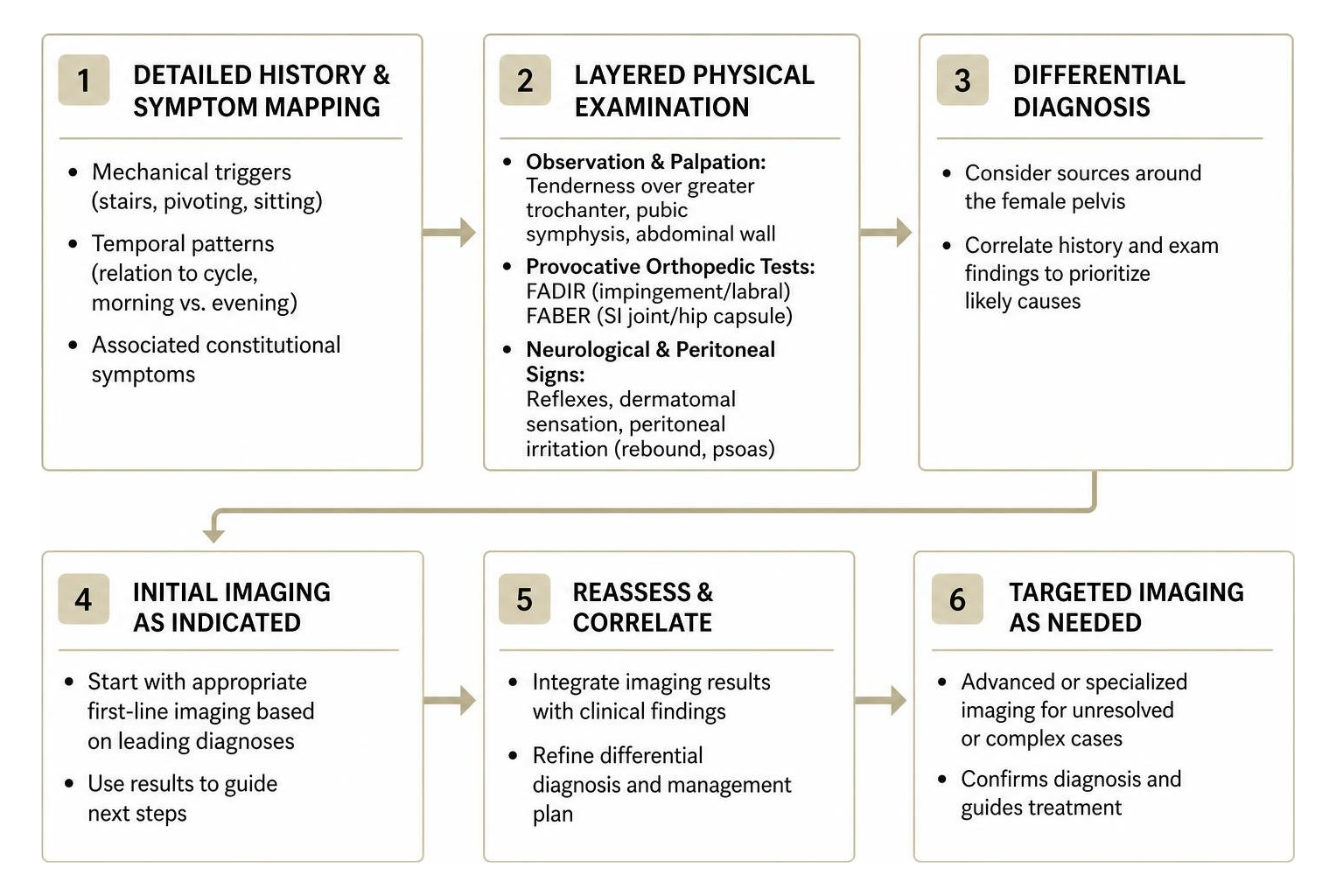
- Detailed History & Symptom Mapping: Your clinician will establish the exact mechanical triggers (stairs, pivoting, sitting), temporal patterns (relation to cycle, morning vs. evening), and associated constitutional symptoms.
- Layered Physical Examination:
- Observation & Palpation: Checking for tenderness over the greater trochanter, pubic symphysis, and abdominal wall.
- Provocative Orthopedic Tests: The FADIR test (Flexion, Adduction, Internal Rotation) pinches the femoral neck against the acetabulum to detect impingement or labral pathology. The FABER test (Flexion, Abduction, External Rotation) stresses the sacroiliac joint and hip capsule.
- Neurological & Peritoneal Signs: Testing deep tendon reflexes, dermatomal sensation, and screening for rebound tenderness or psoas signs to rule out acute abdominal emergencies.
- Targeted Imaging & Diagnostic Modalities:
- Pelvic & Transvaginal Ultrasound: The first-line modality for evaluating reproductive-age women, rapidly detecting ovarian cysts, endometriomas, pelvic free fluid, or acute blood flow anomalies.
- Standing Plain Radiographs (X-rays): Standard anteroposterior pelvis and frog-leg lateral views evaluate bone architecture, joint space narrowing, osteoarthritis, and cam/pincer FAI morphology.
- Diagnostic Musculoskeletal Ultrasound: Excellent for visualizing soft tissues in real time, identifying trochanteric bursal effusion, gluteal tendon tears, or snapping iliopsoas tendons.
- Magnetic Resonance Imaging (MRI / MR Arthrogram): An MRI of the pelvis or an MR arthrogram (where contrast dye is injected directly into the joint) provides the definitive gold standard for detecting labral tears, articular cartilage defects, subchondral bone stress fractures, and deep pelvic endometriosis.
Conservative Relief, Medical Care, and Non-Invasive Therapies
Managing intermittent sharp hip pain requires a balanced strategy that calms acute flare-ups while correcting underlying biomechanical flaws.
Immediate At-Home Relief & Biomechanical Adjustments
- Targeted Rest & Activity Modification: During sharp flare-ups, temporarily pause high-impact running, deep lunges, and aggressive rotational stretches. Avoid “playing through the pain,” which accelerates labral and tendon wear.
- The R.I.C.E. Protocol: Apply ice packs wrapped in a thin towel over the lateral hip or groin for 15 minutes every 3–4 hours to numb acute inflammation.
- Sleep Ergonomics: Avoid sleeping directly on the painful hip. If side-sleeping on the opposite side, place a firm pillow between your knees and ankles to keep your pelvis level and prevent the top leg from pulling into adduction, which stretches the gluteal tendons across the trochanteric bursa. Avoid stomach sleeping, which places the hip in prolonged extension and external rotation.
- Targeted Physical Therapy: A structured rehabilitation program focuses on core stabilization, gluteus medius strengthening (such as clamshells and banded lateral walks), and gentle iliopsoas stretching to restore dynamic pelvic alignment.
Comparing Clinical Management Strategies
When conservative at-home measures fail to deliver lasting stability, various clinical interventions are available:
| Treatment Category | Modality & Mechanism | Best Suited For | Key Advantages & Considerations |
|---|---|---|---|
| Conservative Care | Physical Therapy, RICE, NSAIDs, Sleep Ergonomics | Mild bursitis, minor muscle strains, early postural imbalance | First-line, zero downtime, addresses movement mechanics. |
| Interventional Injections | Corticosteroid Injections or Platelet-Rich Plasma (PRP) | Persistent trochanteric bursitis, severe acute labral inflammation | Delivers rapid local anti-inflammatory relief; repeated steroid shots risk soft-tissue weakening. |
| Advanced Non-Invasive | Low-Dose Radiotherapy (LDRT) | Chronic, refractory joint inflammation, persistent bursitis, osteoarthritis | Non-invasive, drug-free, biological anti-inflammatory reset without surgery or recovery downtime. |
| Surgical Management | Hip Arthroscopy, Bursectomy, or Total Joint Replacement | Large labral tears, severe bony FAI impingement, end-stage arthritis | Corrects structural bone defects; involves surgical recovery, anesthesia, and rehabilitation. |
For patients seeking sustained, non-surgical relief from chronic joint and soft tissue inflammation, exploring advanced hip pain relief through modern non-invasive approaches like Low-Dose Radiotherapy (LDRT) provides a proven alternative to open surgery and repeated steroid injections.
Red Flags: When Sudden Sharp Hip Pain Requires Immediate Medical Attention
While many episodes of coming-and-going hip pain stem from manageable muscular or hormonal triggers, certain clinical presentations indicate medical emergencies.
Seek immediate emergency evaluation if your hip or pelvic pain is accompanied by any of the following “red flag” symptoms:
- Inability to Bear Any Weight: A sudden inability to stand or take even a single step on the affected leg following minor trauma or a twisting motion can signal an acute femoral neck fracture, stress fracture, or severe labral detachment.
- Fever, Chills, and Local Warmth: Systemic fever paired with a hot, swollen, exquisitely tender hip joint points toward septic arthritis—a rapidly destructive joint infection requiring emergency surgical drainage and intravenous antibiotics.
- Positive Pregnancy Test with Sharp, One-Sided Pain: Sudden stabbing lower abdominal, pelvic, or hip pain in a woman of reproductive age with a missed period or positive pregnancy test is a classic indicator of an ectopic pregnancy, which can rupture and cause life-threatening internal hemorrhage.
- Sudden, Severe “Drop-You-to-Your-Knees” Stabbing Pain with Nausea: Acute unilateral pelvic pain accompanied by vomiting or fainting strongly suggests ovarian torsion (twisting of the ovary on its vascular pedicle), which requires emergency laparoscopic surgery within hours to preserve the ovary.
- Neurological Deficits (Saddle Anesthesia / Incontinence): Loss of sensation in the groin or inner thighs (“saddle” distribution), coupled with sudden bowel or bladder incontinence or severe progressive leg weakness, indicates Cauda Equina Syndrome—a surgical emergency caused by critical spinal nerve compression.
Frequently Asked Questions About Intermittent Female Hip Pain
Can hormonal shifts during perimenopause cause sudden hip pain?
Yes. During perimenopause, erratic estrogen drops accelerate collagen breakdown in tendons, ligaments, and cartilage. This sudden loss of tissue elasticity makes the gluteal tendons and hip capsule significantly more susceptible to micro-tears and chronic inflammation, often producing intermittent sharp pains during routine walking or sleeping.
How do I tell if my hip pain is joint damage or an ovarian cyst?
Musculoskeletal joint pain is almost always mechanically reproducible—it catches or spikes when you actively rotate the hip, climb stairs, squat, or bear weight. In contrast, referred pain from an ovarian cyst typically manifests as a deep, internal ache or sharp spasm that flares independently of joint movement, frequently aligning with mid-cycle ovulation or the days leading up to your period. A pelvic ultrasound provides rapid differentiation.
What is the best sleeping position to stop sharp hip pain at night?
The best position is side-sleeping on your unaffected side with a firm pillow placed lengthwise between your knees and ankles. This maintains neutral spinal and pelvic alignment, preventing the upper thigh from dropping across the midline and irritating the trochanteric bursa. If you prefer sleeping on your back, place a medium pillow directly under your knees to reduce tension on the iliopsoas muscles and lower back.
Conclusion
Intermittent, sharp hip pain in women is a complex signal generated at the intersection of joint biomechanics, spinal neurology, and cyclical endocrine health. Whether your symptoms stem from a mechanical labral impingement, stubborn trochanteric bursitis, or referred pelvic tension, ignoring recurrent stabbing sensations only allows micro-trauma and compensatory muscle imbalances to compound.
By maintaining a detailed symptom log, practicing smart sleep ergonomics, and pursuing a layered diagnostic evaluation with your healthcare provider, you can uncover the precise root cause of your discomfort. When chronic joint inflammation refuses to settle with conservative self-care, exploring modern, non-invasive therapeutic options can help restore your mobility and deliver lasting joint relief solutions without surgery or extended downtime.
