Why Knee Arthritis Pain Can Reach Your Lower Leg
Yes, knee arthritis can cause aches that reach the shin or calf. A painful knee may change how you walk, making nearby muscles work harder. But pain that runs down the whole leg is less typical of knee arthritis. It may point to a problem in the hip or lower back.
Notice where the pain starts and whether you also have tingling, numbness, or swelling. Get medical help promptly if your calf suddenly swells or you cannot put weight on your leg.
I’m Dr. Koneru, and I’ll help you sort through these clues and the next steps.
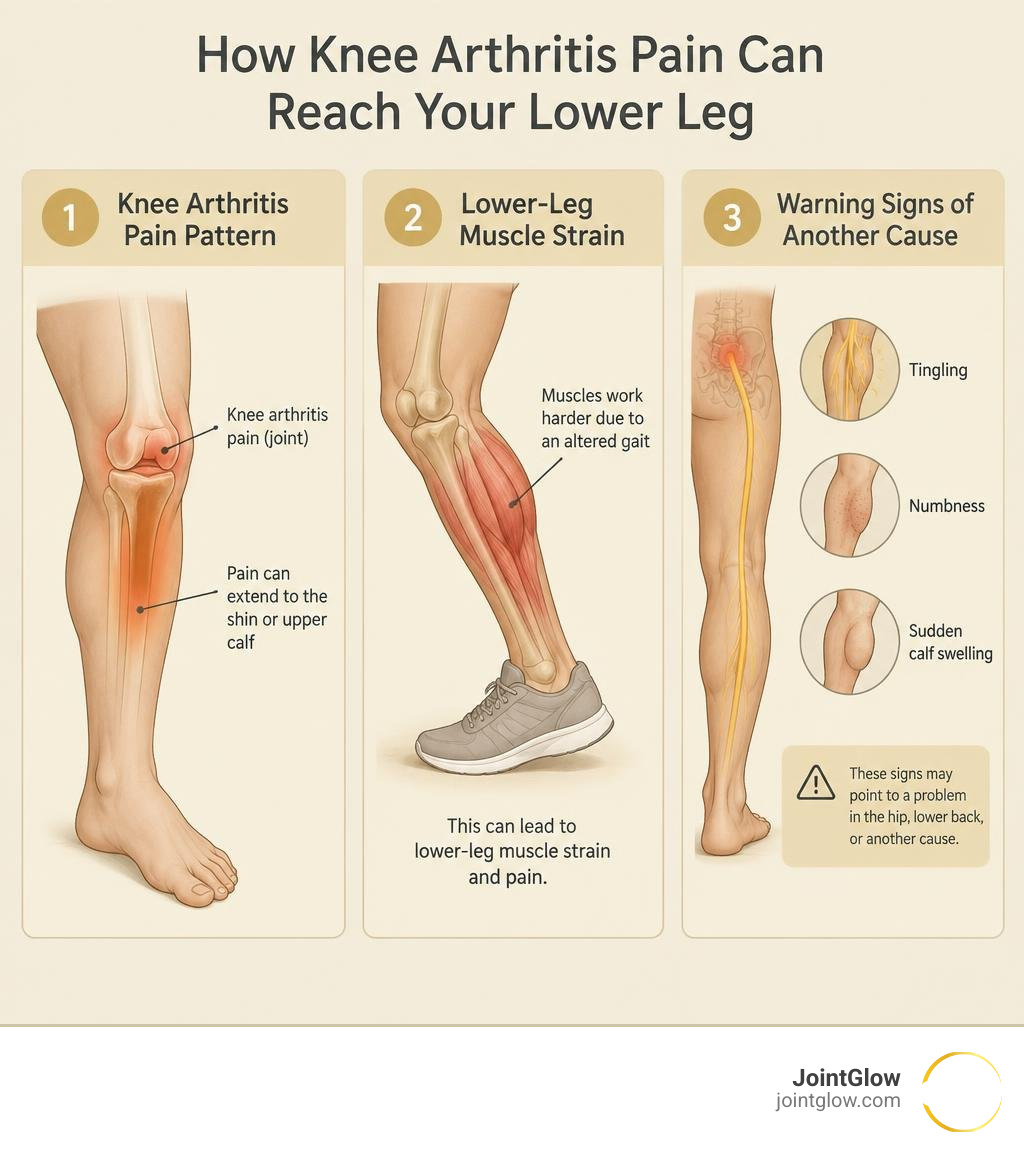
Can Knee Arthritis Pain Radiate Down the Leg?
When dealing with chronic joint wear, many patients ask us: can knee arthritis pain radiate down the leg? The short answer is yes, though the mechanisms behind this spread involve more than just damaged cartilage rubbing together.
Knee osteoarthritis accounts for more than 80% of all osteoarthritis cases, affecting over 32.5 million adults in the United States alone. As we look at the rising prevalence of degenerative joint disease in 2026, projections estimate that over 65 million Americans live with some form of arthritis—a number expected to grow substantially by 2050. Nearly 40% of working-age adults report that arthritis hinders their daily activities, and knee osteoarthritis causes an average 40% reduction in overall physical activity.
At its core, knee arthritis is a whole-joint disease. It involves progressive cartilage breakdown, subchondral bone remodeling, osteophyte (bone spur) formation, and persistent low-grade synovial inflammation. The joint capsule is densely innervated with nociceptive (pain-sensing) nerve fibers. When persistent inflammation sets in, these nerve endings become hyper-sensitized—a biological phenomenon known as peripheral sensitization.
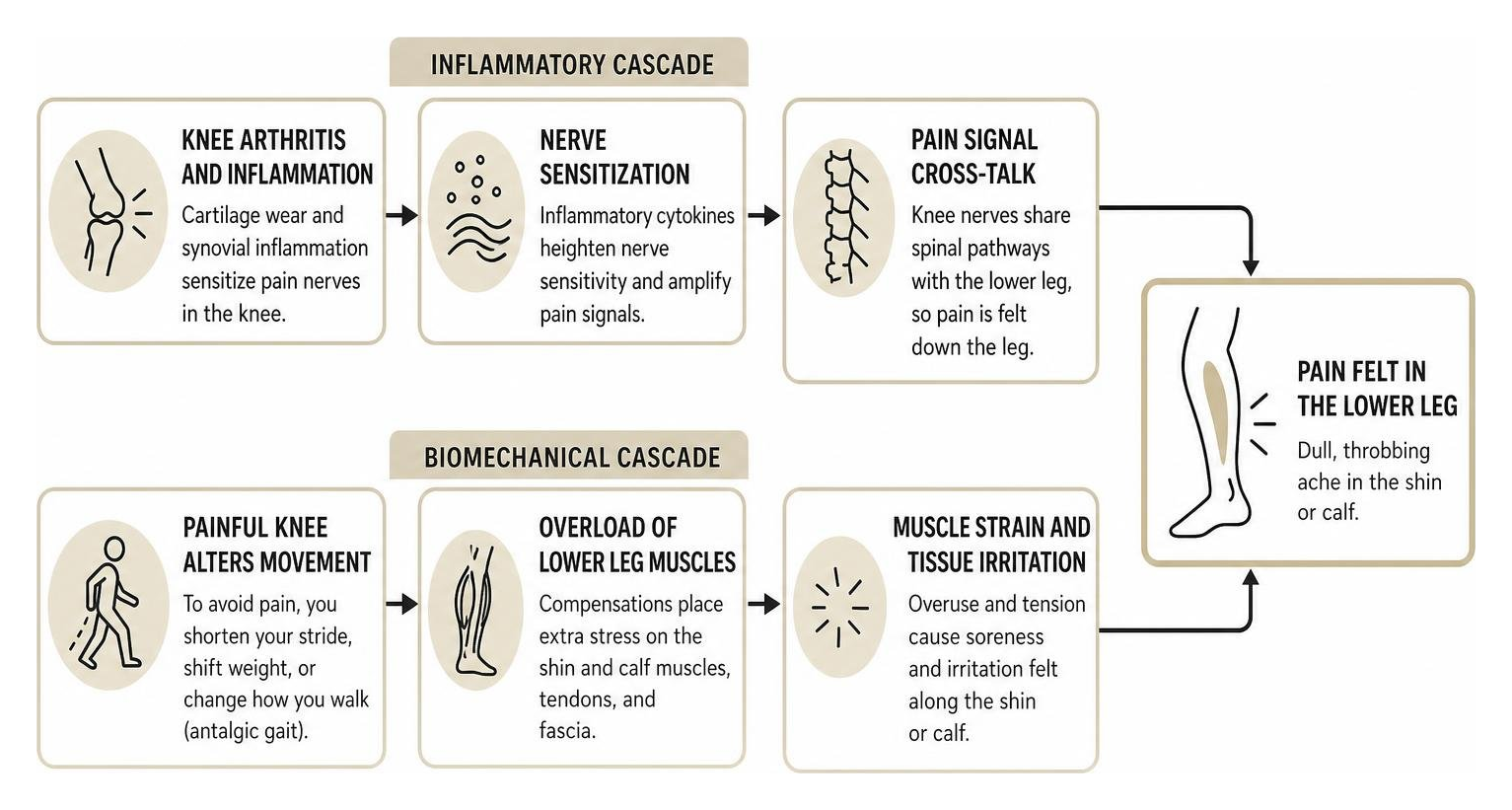
As inflammatory cytokines pool within the joint space, surrounding nerve endings fire heightened distress signals to the spinal cord. Because the sensory nerves supplying the knee share spinal pathways with the lower leg, your brain can perceive joint-level distress as a dull, throbbing ache extending downward into the upper calf or along the anterior shin. Understanding how various knee conditions and joint degeneration trigger this neurological cross-talk is the first step toward finding lasting relief.
Biomechanical Compensation: Can Knee Arthritis Pain Radiate Down the Leg via Muscle Strain?
While direct nerve sensitization plays a role, radiating discomfort frequently stems from altered biomechanics. When your knee hurts, your body instinctively changes the way you move to minimize discomfort. You shorten your stride, avoid fully extending the leg, or shift weight onto the outer edge of your foot—developing what clinicians call an antalgic gait.
This altered walking pattern disrupts the entire kinetic chain:
- Calf Overuse: Muscles like the gastrocnemius and soleus cross behind the knee joint and insert into the heel. When your knee cannot flex or extend smoothly, these calf muscles contract abnormally to stabilize your stride, leading to chronic muscle tightness, cramping, and fatigue aches.
- Shin Strain: The tibialis anterior along the front of your shin works overtime to clear your toes during a shortened, protective gait cycle, creating a dull ache often mistaken for nerve pain or shin splints.
- Tendon Tension: Altered foot strikes transfer uneven torsional forces down into the ankle and Achilles tendon.
Over days and weeks, these secondary muscle strains manifest as a spreading ache that travels south from the arthritic knee.
Secondary Joint Complications: Baker’s Cysts and Shin Pain
Another direct cause of downward radiating discomfort is the development of a popliteal cyst, commonly known as a Baker’s cyst. When an arthritic knee becomes inflamed, the synovial membrane produces excess joint fluid. This excess fluid builds pressure, pushing backward through the posterior joint capsule into the popliteal space behind your knee.
A Baker’s cyst creates a distinct sensation of fullness, tightness, or pressure, especially when you fully straighten your leg or bend it past 90 degrees. If the cyst enlarges significantly or ruptures, fluid escapes and tracks downward between the muscle planes of the calf. This causes a sudden, painful spreading sensation, swelling, and localized warmth along the back of the leg and ankle.
In some severe cases of joint degeneration, advanced bone loss can lead to subchondral insufficiency fractures of the proximal tibia, causing sharp, lancinating pain that shoots down the shin bone, as highlighted in clinical reviews discussing can arthritis in the knee cause pain in the whole leg.
How to Distinguish Radiating Knee Pain from Sciatica and Hip Arthritis
Because the lower body relies on interconnected nerves and shared kinetic structures, pain felt in the leg does not always start where you feel it. Determining whether your symptoms originate in the knee, the lumbar spine, or the hip joint requires examining the character, location, and behavior of the pain.
| Characteristic | Knee Osteoarthritis (with Lower Leg Ache) | Lumbar Radiculopathy / Sciatica | Hip Osteoarthritis (Referred Pain) |
|---|---|---|---|
| Primary Pain Origin | Knee joint line / periarticular tissues | Lower back (L4-S1 nerve roots) | Deep groin or outer hip capsule |
| Pain Quality | Deep, dull ache; stiffness after rest; mechanical grinding | Sharp, shooting, electric, burning, or tingling | Deep ache; stiffness with rotation; catching |
| Distribution | Knee joint, extending to upper calf or shin | Glute, posterior thigh, down past knee to foot | Groin, anterior thigh, radiating down to knee/shin |
| Neurological Signs | None (no true numbness, pins-and-needles, or drop foot) | Common (dermatomal numbness, tingling, motor weakness) | None (joint-mediated referral without primary nerve loss) |
| Aggravating Factors | Weight-bearing, stairs, prolonged standing, cold weather | Bending forward, sitting, coughing, straining | Walking, internal rotation, getting in/out of a car |
| Relieving Factors | Gentle movement, rest, heat/ice, unweighting | Changing spinal posture, lying flat, walking | Unweighting the hip, sitting with hips open |
Evaluating Hip-Originating Referred Knee Pain
One of the most frequent clinical surprises in orthopedic medicine is finding that knee and lower leg pain actually stems from the hip. Research indicates that hip pathology refers pain below the knee in approximately 47% of hip osteoarthritis cases. In fact, clinical studies reveal that up to 14 out of 21 patients misdiagnosed with primary knee issues experienced complete resolution of their knee symptoms after receiving appropriate hip-focused care.
This referral happens through shared neurological pathways. The hip and knee receive sensory branches from the same primary nerves: the obturator nerve and the femoral nerve. When the hip joint degenerates, nociceptive signals travel up these shared nerve trunks. The brain, struggling to pinpoint the exact origin along the shared pathway, misinterprets the distress as coming from the knee or upper shin.
Patients with hip-driven leg pain often present with the classic “C-sign”—cupping the hand over the outer hip with the thumb pointing toward the buttock (where up to 71% of hip patients feel discomfort) and fingers resting on the groin (present in 84.3% of hip cases). Clinicians use physical maneuvers like the FABER (Flexion, ABduction, External Rotation) and FADIR tests to reproduce hip symptoms, helping confirm whether the pain radiating down your leg starts higher up the chain, as detailed in pain specialty analyses on why hip pain travels down your leg.
Identifying Lumbar Spine and Sciatic Nerve Irritation
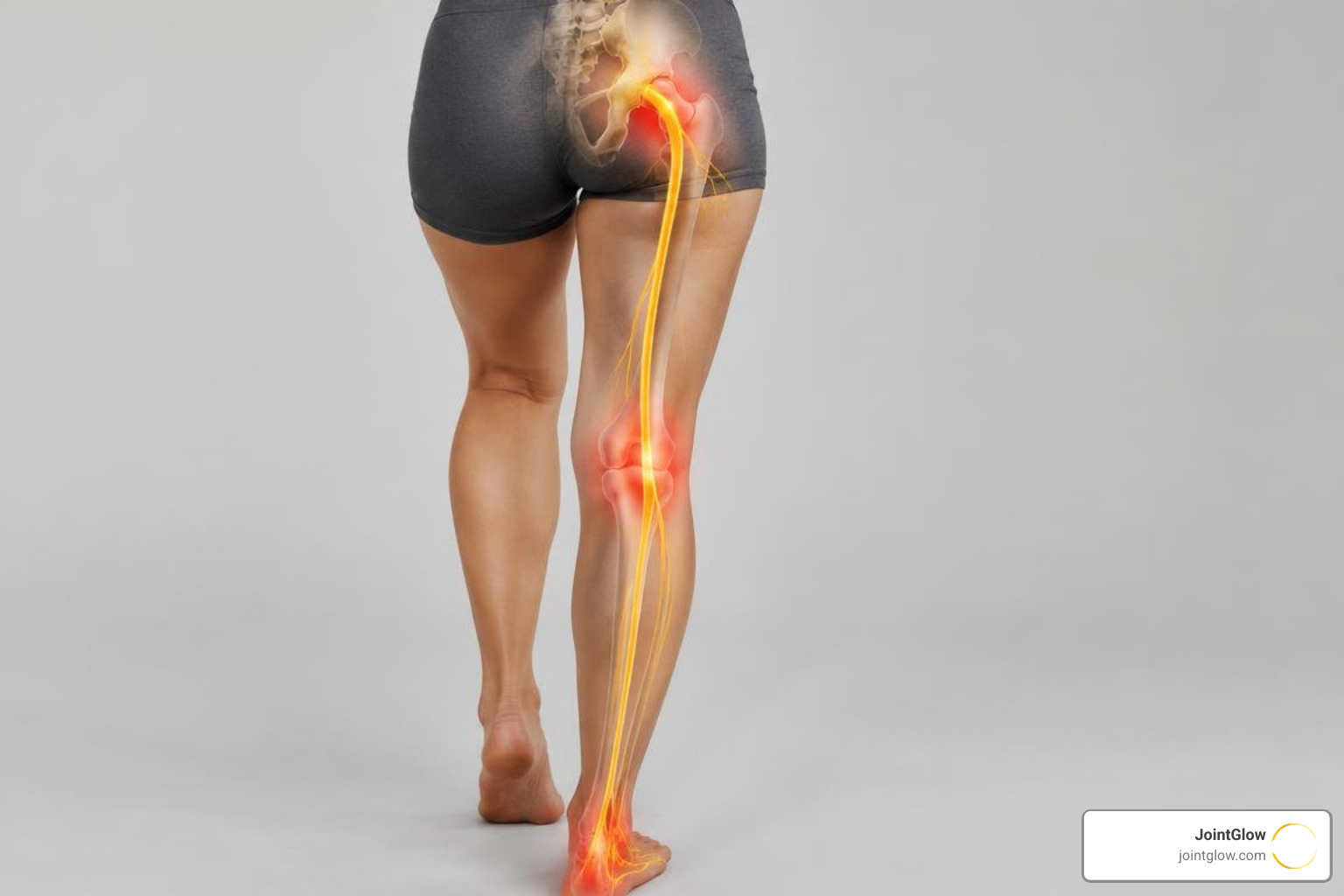
Sciatica affects up to 40% of adults at some point in their lives, making it another primary suspect when pain travels down the leg. Unlike the dull, diffuse muscle fatigue of knee compensation, sciatic pain follows a precise dermatomal path caused by mechanical compression or biochemical irritation of the L4, L5, or S1 nerve roots in the lower back.
Sciatic pain typically feels sharp, lancinating, or burning. It travels from the lower back or gluteal region down the back or side of the thigh, passes the knee, and often shoots into the calf, ankle, or toes. Accompanying symptoms include:
- “Pins-and-needles” (paresthesia) in the lower leg or foot
- Localized skin numbness
- True motor weakness, such as difficulty lifting the front of your foot (foot drop)
If your leg pain is accompanied by electric shocks or sensory loss in your toes, the underlying issue is almost certainly spinal rather than isolated knee arthritis.
Step-by-Step Action Plan to Manage and Relieve Radiating Knee Pain
Managing knee arthritis pain that radiates into your lower leg requires a structured, multi-modal strategy. By addressing joint inflammation, restoring muscle balance, and exploring modern non-surgical interventions, you can regain comfortable mobility.

1. Gait and Activity Adjustments
To stop the compensatory muscle overuse that makes your lower leg ache, focus on stabilizing the knee joint and evening out your stride:
- Targeted Quadriceps and Glute Strengthening: Perform isometric quad sets, straight leg raises, and terminal knee extensions. Strengthening the vastus medialis and gluteal muscles absorbs ground impact, taking mechanical pressure off the arthritic joint line.
- Calf and Hamstring Flexibility: Perform gentle wall calf stretches and seated hamstring stretches daily. Keeping the posterior chain flexible prevents tight calf muscles from pulling abnormally on the back of the knee.
- Low-Impact Conditioning: Swap high-impact activities like running on asphalt for swimming, stationary cycling, or water aerobics. Cycling moves synovial fluid through the knee capsule without putting excessive load on degenerated cartilage.
- Pacing and Activity Modification: Break prolonged walking or standing into manageable intervals. Use cushioned, supportive footwear with neutral arch support or shock-absorbing orthotics to reduce impact transmission up the leg.
- Targeted Anti-Inflammatory Support: Work with your doctor to explore comprehensive, non-invasive multidisciplinary joint treatments that address both soft tissue compensation and underlying joint wear.
2. Advanced Non-Surgical Joint Interventions
When conservative exercises and temporary measures are not enough to quiet persistent joint pain, advanced non-surgical modalities offer powerful alternatives to invasive joint replacement surgery.
For lasting joint inflammation control, Low-Dose Radiotherapy (LDRT) provides a non-invasive, Medicare-covered option for chronic joint pain. Unlike high-dose radiation used in oncology, LDRT delivers ultra-low doses—equivalent to a fraction of standard diagnostic imaging protocols—directly to the arthritic joint capsule.
At this microscopic level, LDRT calms hyperactive immune cells (macrophages and leukocytes), downregulates pro-inflammatory cytokines, and disrupts the pain signaling cycle. By reducing chronic synovial inflammation at its biological root, LDRT helps relieve joint stiffness and eliminates the secondary muscle strain radiating down the leg. To understand the clinical evidence behind this approach, discover how low-dose radiotherapy delivers deep joint relief without surgery, incisions, or downtime.
When to Seek Medical Evaluation for Radiating Leg Pain
While mild muscle soreness following a long walk is common with knee arthritis, certain red-flag symptoms require an immediate medical assessment.
Seek professional medical care right away if you experience any of the following:
- Sudden, Severe Calf Swelling or Warmth: A warm, tender, swollen calf can mimic a ruptured Baker’s cyst but may actually be a deep vein thrombosis (DVT)—a blood clot requiring urgent ultrasound evaluation.
- Inability to Bear Weight: Sudden, sharp pain that prevents you from putting any weight on your leg may indicate a subchondral insufficiency fracture or acute meniscal tear.
- Progressive Neurological Deficits: New or worsening foot drop (inability to lift the front of your foot), progressive muscle weakness, or numbness spreading down the foot signals acute spinal nerve compression.
- Fever, Chills, or Severe Joint Redness: These symptoms can indicate a septic joint infection, which is a medical emergency.
- Loss of Bowel or Bladder Control: Accompanied by leg numbness, this is a sign of cauda equina syndrome, requiring immediate emergency intervention.
During a diagnostic evaluation, your physician will perform weight-bearing X-rays to assess joint space narrowing and bone spur formation. An MRI may be ordered to evaluate soft tissue structures, detect occult bone stress fractures, or confirm the presence of a Baker’s cyst.
Frequently Asked Questions About Radiating Knee Pain
Diagnostic Testing: Can Knee Arthritis Pain Radiate Down the Leg Without Showing on X-rays?
Yes. In the early stages of osteoarthritis, cartilage breakdown and synovial inflammation occur before significant joint space narrowing or bone spurs appear on standard static X-rays.
This early-stage joint lining inflammation can cause peripheral nerve sensitization and compensatory muscle aches in the calf or shin even with “normal” radiographic findings. If symptoms persist despite clear X-rays, magnetic resonance imaging (MRI) or high-resolution musculoskeletal ultrasound can reveal early soft-tissue inflammation, bone marrow lesions, or occult fluid buildup. For more insights on diagnosis and treatment pathways, explore our common knee arthritis questions.
Can a Baker’s Cyst Cause Pain That Reaches the Ankle?
Yes. While a Baker’s cyst typically causes tightness directly behind the knee and in the upper calf, a cyst that leaks or ruptures allows synovial fluid to track downward along the fascial planes between your calf muscles.
This fluid accumulation, known clinically as pseudothrombophlebitis, exerts downward pressure that can cause swelling, tenderness, and bruising all the way to the inner ankle and heel.
How Does Walking Impact Radiating Arthritis Pain in the Lower Leg?
Walking is essential for joint nutrition, but high-impact or unpaced walking can aggravate radiating symptoms if your movement mechanics are compromised.
Each step transmits ground reaction forces through the foot, shin, and knee. If your joint is stiff, your calf and shin muscles contract excessively to absorb the shock, worsening lower-leg fatigue.
Adopting a gradual walking routine on forgiving surfaces (like dirt trails, tracks, or treadmills), wearing supportive footwear, and incorporating regular rest breaks prevents muscle overload while keeping your joints lubricated.
Conclusion
Understanding why your leg aches helps take the uncertainty out of managing knee arthritis. While severe whole-leg pain often points to the lower back or hip, localized aches traveling down your shin or calf are frequently driven by synovial inflammation, nerve sensitization, and compensatory muscle overuse from an altered stride.
You do not have to settle for masking your symptoms with temporary pain relievers or moving straight to major joint replacement surgery. At JointGlow, we focus on delivering non-surgical, Medicare-covered solutions like low-dose radiotherapy (LDRT) that biologically reset persistent inflammation at the cellular level. By addressing joint-lining inflammation and restoring balanced movement mechanics, you can achieve durable pain relief and walk with confidence again.
Take the first step toward lasting mobility and explore innovative joint pain relief at JointGlow today.
